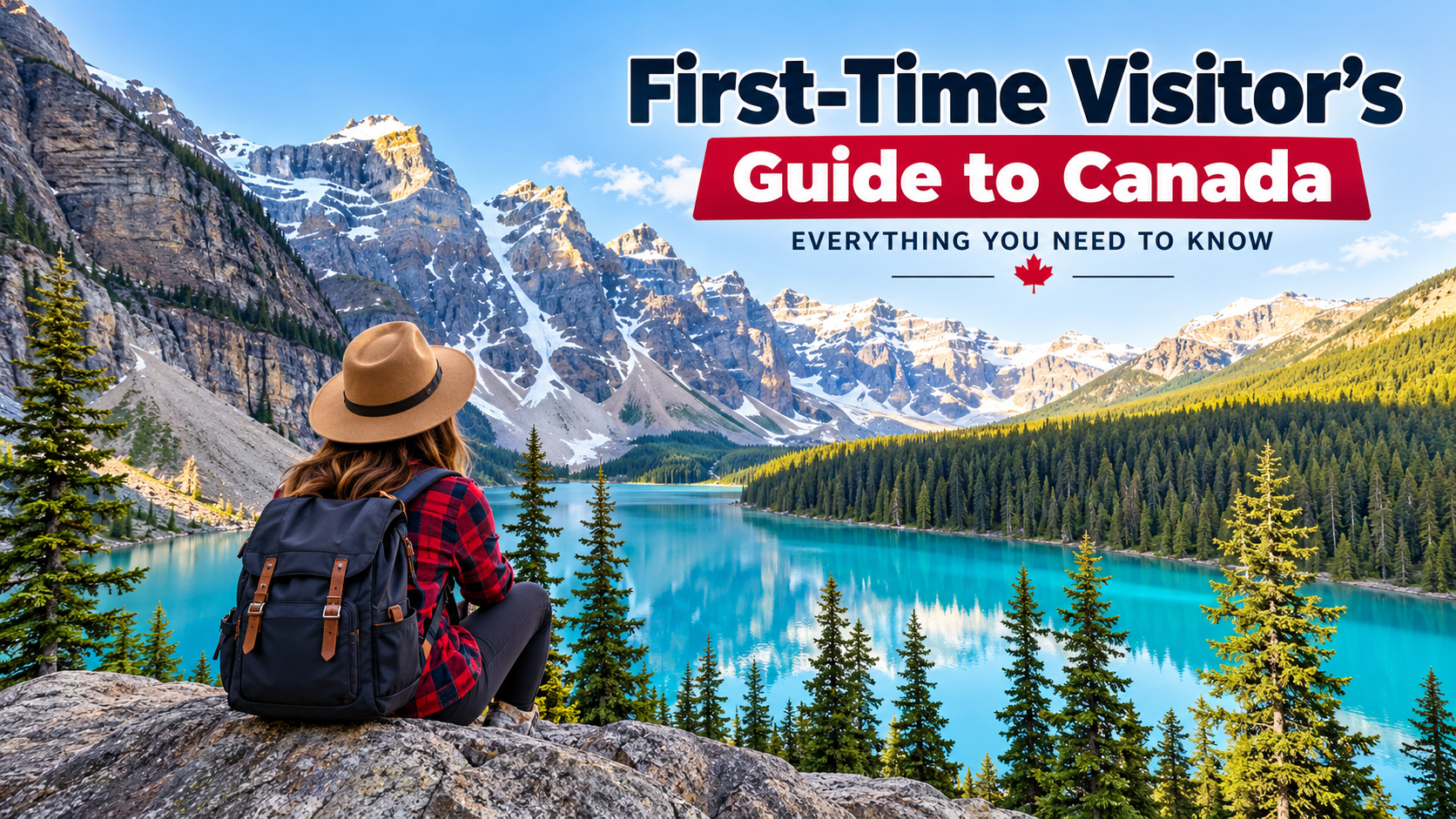
First-Time Visitor’s Guide to Canada: Everything You Need to Know
Planning your first trip to Canada? From the breathtaking Canadian Rockies to the vibrant streets of Toronto and Montréal, Canada offers incredible destinations, diverse cultures, and unforgettable experiences.
However, first-time visitors to Canada often have many questions. Do you need a visa? When should you travel? How much money should you budget? Is it better to rent a car or use public transportation?
This complete first-time visitor’s guide to Canada will help you plan your trip with confidence. You’ll learn about entry requirements, destinations, weather, transportation, accommodation, travel costs, safety, and common mistakes to avoid.
Whether you’re visiting Canada for a family vacation, a romantic getaway, or an outdoor adventure, this guide covers the essentials.
1. Understand Canada’s Geography Before Planning Your Trip
Canada is the second-largest country in the world by total area, and traveling between major destinations can take much longer than first-time visitors expect.
For example, Vancouver and Toronto are thousands of kilometres apart. Exploring both cities on a short vacation generally requires a domestic flight.
Canada has ten provinces and three territories, each with its own landscapes, attractions, and cultural experiences.
Western Canada
British Columbia and Alberta are popular for mountains, lakes, forests, coastal scenery, and outdoor adventures.
Popular destinations include:
- Vancouver
- Victoria
- Whistler
- Banff National Park
- Lake Louise
- Jasper National Park
- Calgary
Central Canada
Ontario and Quebec are excellent for city sightseeing, historic attractions, waterfalls, museums, and cultural experiences.
Popular destinations include:
- Toronto
- Niagara Falls
- Ottawa
- Montréal
- Québec City
- Mont-Tremblant
Atlantic Canada
Nova Scotia, New Brunswick, Prince Edward Island, and Newfoundland and Labrador offer beautiful coastlines, fishing villages, historic communities, and scenic drives.
Northern Canada
Yukon, the Northwest Territories, and Nunavut offer wilderness experiences, northern landscapes, Indigenous cultural experiences, and opportunities to see the Northern Lights.
First-time visitor tip: Choose one or two nearby regions instead of attempting to explore the entire country in one trip.
For more inspiration, read our 25 Best Places to Visit in Canada guide.
2. Check Canada’s Visa and Entry Requirements
Before booking your trip, check whether you need a visitor visa, an Electronic Travel Authorization (eTA), or neither.
Entry requirements depend on factors such as your citizenship, travel documents, immigration status, and method of arrival.
Visitor visa
Some international travelers must obtain a Canadian visitor visa before traveling.
A visa allows you to travel to a Canadian port of entry and request admission. It does not guarantee entry.
Electronic Travel Authorization (eTA)
Certain visa-exempt foreign nationals need an eTA when traveling to Canada by air.
An eTA is electronically linked to your passport. Requirements differ for travelers arriving by land or sea, and exemptions apply.
Essential travel documents
Depending on your circumstances, you may need:
- A valid passport or accepted travel document.
- A valid visitor visa or eTA, if required.
- Accommodation information.
- Details of your planned visit.
- Evidence of sufficient funds.
- A return or onward travel itinerary, where relevant.
- Additional documentation for children traveling with one parent or another adult.
Canadian border officers determine admissibility when travelers arrive.
Important: Never rely on unofficial visa websites or assume another person’s entry requirements apply to you.
Check the Government of Canada’s official visitor information before making travel arrangements.
3. Choose the Best Time to Visit Canada
Canada experiences four distinct seasons, but temperatures and weather conditions vary significantly by region.
Spring: March to May
Spring is attractive for gardens, city sightseeing, and quieter travel in some destinations.
Vancouver and Victoria often experience milder spring conditions than the Canadian Prairies.
Summer: June to August
Summer is the most popular season for national parks, lakes, road trips, hiking, beaches, and festivals.
Popular destinations such as Banff and Lake Louise can become very busy.
Autumn: September to November
Autumn is famous for colourful forests, scenic road trips, and cooler temperatures.
Ontario, Quebec, and Atlantic Canada are especially attractive during fall foliage season.
Winter: December to February
Winter is ideal for skiing, snowboarding, snowshoeing, holiday celebrations, and snowy mountain scenery.
Some regions experience extreme cold, so proper clothing and planning are essential.
Recommended for many first-time visitors: June through September, particularly for general sightseeing and outdoor activities.
Read our detailed Best Time to Visit Canada: Month-by-Month Guide to choose the right travel dates.
4. Best Places to Visit in Canada for First-Time Travelers
Canada offers hundreds of destinations, but some are especially rewarding for a first visit.
Banff National Park, Alberta
Banff is one of Canada’s most famous mountain destinations.
Visitors can enjoy Lake Louise, the Bow Valley, mountain viewpoints, scenic drives, and seasonal outdoor activities.
Popular attractions include:
- Lake Louise
- Banff Avenue
- Lake Minnewanka
- Bow Falls
- Sulphur Mountain
- Johnston Canyon
Some attractions require advance transportation arrangements or have seasonal restrictions.
Vancouver, British Columbia
Vancouver combines urban attractions with mountains, forests, and ocean scenery.
Popular activities include exploring Stanley Park, visiting Granville Island, walking along the waterfront, and discovering local neighbourhoods.
Toronto, Ontario
Toronto is Canada’s largest city and offers museums, shopping, entertainment, diverse food, and cultural attractions.
Popular sights include the CN Tower, Royal Ontario Museum, Toronto Islands, and Distillery Historic District.
Niagara Falls, Ontario
Niagara Falls is one of Canada’s most famous natural attractions.
Visitors can explore waterfall viewpoints, seasonal boat experiences, gardens, and nearby Niagara-on-the-Lake.
Montréal, Quebec
Montréal offers a unique combination of history, culture, architecture, food, and festivals.
Explore Old Montréal, Mount Royal, local markets, and the city’s distinctive neighbourhoods.
Québec City, Quebec
Québec City is known for its historic architecture, cobblestone streets, and beautiful Old Québec district.
It is especially charming during summer and the winter holiday season.
Jasper National Park, Alberta
Jasper offers mountain scenery, lakes, waterfalls, and wildlife-viewing opportunities.
Check current park access, road conditions, and trail closures before visiting.
Victoria, British Columbia
Victoria is an attractive destination for gardens, coastal walks, historic buildings, and relaxed city sightseeing.
For additional destination ideas, explore our Best Places to Visit in Canada article.
5. How Many Days Do You Need for Your First Canada Trip?
The ideal trip length depends on your destinations and interests.
| Trip duration | Suggested travel plan |
|---|---|
| 3–4 days | Explore one major city and nearby attractions |
| 5–7 days | Visit one region, such as Vancouver and Victoria |
| 7–10 days | Explore Banff, Lake Louise, and Jasper |
| 10–14 days | Combine several destinations within one region |
| 2–3 weeks | Explore two or more regions with careful transportation planning |
Sample 7-day Canadian Rockies itinerary
Day 1: Arrive in Calgary and travel to Banff.
Day 2: Explore Banff town, Bow Falls, and nearby viewpoints.
Day 3: Visit Lake Louise and enjoy permitted sightseeing activities.
Day 4: Explore additional Banff National Park attractions.
Day 5: Drive the Icefields Parkway toward Jasper, checking seasonal conditions.
Day 6: Explore accessible Jasper attractions and viewpoints.
Day 7: Return toward Calgary or continue your journey.
This itinerary requires significant driving. Allow extra time for weather, traffic, stops, and road restrictions.
6. Transportation in Canada: How to Get Around
Choosing the right transportation is essential because Canadian destinations are often far apart.
Domestic flights
Flights are useful when traveling between distant cities such as Vancouver, Toronto, Montréal, and Halifax.
Book early when possible and compare baggage policies.
Rental cars
A rental car is convenient for road trips, national parks, and rural destinations.
Before renting, review:
- Driver’s licence requirements.
- Minimum driver age and surcharges.
- Insurance coverage.
- Mileage restrictions.
- One-way rental fees.
- Winter tire requirements.
- Parking costs.
Public transportation
Major cities such as Toronto, Vancouver, Montréal, Calgary, and Edmonton have public transportation systems.
Buses, subways, light rail, and commuter services can reduce the need for a rental vehicle.
Train travel
VIA Rail operates passenger train services on selected routes across Canada.
Train travel can be scenic, but schedules and travel times may not suit every itinerary.
Guided tours and private transportation
Guided tours may be useful for visitors who prefer not to drive, especially when visiting unfamiliar mountain regions.
Travel tip: Research transportation options before booking accommodation. A hotel outside a city centre may be inexpensive but difficult to reach without a vehicle.
7. How Much Does a Trip to Canada Cost?
Canada can be moderately expensive or very expensive depending on the destination, travel season, and accommodation choices.
The following are illustrative daily planning ranges in Canadian dollars for one adult, excluding international flights.
| Travel style | Approximate daily budget |
|---|---|
| Budget traveler | CAD $100–$180 |
| Mid-range traveler | CAD $180–$350 |
| Higher-end traveler | CAD $350+ |
These are rough estimates, not current price quotes. Costs can be substantially higher in popular destinations, during peak seasons, or for solo travelers renting vehicles.
Main travel expenses
Accommodation: Hotels, hostels, vacation rentals, and campsites vary widely in price.
Food: Restaurants, groceries, cafés, and takeaway meals can significantly affect your daily budget.
Transportation: Rental cars, fuel, parking, flights, and public transit should be considered.
Attractions: Some museums, tours, national parks, and outdoor activities charge admission fees.
Travel insurance: Consider emergency medical coverage and trip interruption protection.
Money-saving tips
- Travel during shoulder seasons.
- Book accommodation early.
- Compare hotel locations and transportation costs.
- Use public transit in major cities.
- Choose some free attractions.
- Prepare occasional meals if your accommodation permits.
- Avoid unnecessary long-distance travel.
8. Where to Stay in Canada
Canada offers accommodation for different travel styles and budgets.
Hotels
Hotels are widely available in cities and tourist destinations.
Choose a location based on transportation, attractions, and parking availability.
Hostels
Hostels may offer lower-cost accommodation and opportunities to meet other travelers.
Vacation rentals
Vacation rentals can be useful for families and longer stays.
Check local regulations, cancellation policies, cleaning fees, and transportation options.
Camping
Camping is popular in Canada’s national and provincial parks.
Some campsites require reservations months in advance, especially during summer.
Use the official Parks Canada reservation website to check participating national park camping options.
9. Canadian Weather: What First-Time Visitors Should Expect
One of the most important things to understand about Canada is that weather varies dramatically across the country.
Vancouver may experience rain while Alberta faces snow and parts of Eastern Canada experience different conditions.
Summer weather
Many southern destinations experience warm or hot summer days.
However, mountain temperatures can drop significantly after sunset.
Winter weather
Winter temperatures can fall far below freezing in many regions.
Snow, ice, strong winds, and road closures may affect travel.
Mountain weather
Mountain conditions can change rapidly throughout the year.
A sunny morning can be followed by rain, wind, or snow at higher elevations.
What to pack
- Comfortable walking shoes.
- Weather-resistant outerwear.
- Layers for changing temperatures.
- Sunscreen and sunglasses.
- A reusable water bottle.
- A portable phone charger.
- Suitable winter clothing when needed.
Check official weather forecasts before outdoor activities.
10. Travel Insurance and Healthcare in Canada
International visitors should consider purchasing travel medical insurance before arriving in Canada.
Canada has publicly funded healthcare systems for eligible residents, but tourists are generally not covered by provincial healthcare plans simply because they are visiting.
Unexpected medical expenses can be significant.
Consider insurance that covers:
- Emergency medical treatment.
- Hospital stays.
- Medical evacuation when necessary.
- Trip cancellation or interruption.
- Lost or delayed baggage.
Read policy exclusions carefully, especially if you plan to ski, hike, or participate in adventure activities.
11. Currency, Payments and Tipping in Canada
Canada uses the Canadian dollar (CAD).
Credit and debit cards are widely accepted in major cities, although some smaller businesses and remote locations may have limited payment options.
Currency tips
- Check exchange rates before traveling.
- Consider foreign transaction fees.
- Keep a small amount of Canadian cash for emergencies.
- Use reputable banks or currency exchange services.
- Review whether sales tax is included in advertised prices.
Tipping
Tipping is customary in many Canadian restaurants and personal services, but it is generally voluntary.
In sit-down restaurants, a tip of approximately 15–20% before tax is common, depending on the service and local practices.
Some establishments automatically add gratuities for larger groups.
12. Mobile Internet and Communication
Mobile coverage is generally good in major Canadian cities but can be limited in remote areas, mountain parks, and northern destinations.
Before arriving, consider:
- International roaming charges.
- Canadian prepaid SIM options.
- eSIM compatibility.
- Offline navigation maps.
- Portable charging devices.
Travel tip: Download maps before driving through remote mountain regions where mobile service may be unreliable.
13. Important Canadian Customs and Travel Etiquette
Canada is culturally diverse, and respectful travel practices will help make your visit more enjoyable.
Respect local communities
Follow local regulations, respect private property, and be considerate when photographing people or visiting residential neighbourhoods.
Understand bilingual services
English and French are Canada’s official languages.
French is widely used in Quebec, although many tourist services also operate in English.
Respect Indigenous cultures
Canada is home to First Nations, Inuit, and Métis peoples.
Seek authentic Indigenous-led tourism experiences, follow community guidance, and respect cultural protocols.
Follow national park rules
Stay on designated trails, dispose of waste responsibly, and follow wildlife safety instructions.
Never feed wild animals.
Follow smoking and alcohol regulations
Rules vary by province, territory, municipality, and venue.
Check local laws rather than assuming regulations are identical across Canada.
14. Safety Tips for First-Time Visitors to Canada
Canada offers many enjoyable travel experiences, but visitors should still take normal precautions.
Wildlife safety
Wild animals may be encountered in national parks and rural regions.
Maintain appropriate distances, never feed wildlife, and follow official guidance.
Winter driving
Snow, ice, freezing rain, and reduced visibility can make driving dangerous.
Check highway conditions and consider whether you have sufficient winter driving experience.
Hiking safety
Before hiking:
- Check trail conditions.
- Review weather forecasts.
- Carry adequate water and supplies.
- Tell someone your route.
- Understand wildlife precautions.
- Choose trails suitable for your experience.
Emergency assistance
Call 911 for police, fire, or ambulance emergencies where 911 service is available.
Remote areas may have limited communications coverage.
For national park travel guidance, consult Parks Canada’s first-time visitor guide.
15. Common Mistakes First-Time Visitors Make
Trying to visit too many destinations
Canada’s size makes it difficult to explore several distant regions during a short vacation.
Choose fewer destinations and spend more time enjoying each one.
Underestimating travel distances
Driving between mountain towns, national parks, and major cities can take several hours.
Plan realistic travel days with breaks.
Booking popular attractions too late
Accommodation, campsites, tours, and transportation may sell out during peak travel periods.
Ignoring seasonal closures
Some hiking trails, roads, campgrounds, and attractions operate seasonally.
Packing unsuitable clothing
Weather can change quickly, particularly in mountainous and coastal regions.
Forgetting travel insurance
Unexpected illness, accidents, or cancellations can create significant expenses.
Relying entirely on mobile service
Download offline maps and save important booking information.
16. Essential Canada Travel Checklist
Use this checklist before your departure:
-
Check passport validity.
-
Confirm visa or eTA requirements.
-
Book international flights.
-
Reserve accommodation.
-
Plan domestic transportation.
-
Research destinations and driving distances.
-
Check national park reservations.
-
Purchase appropriate travel insurance.
-
Review weather forecasts.
-
Pack suitable clothing.
-
Check mobile roaming or eSIM options.
-
Save important travel documents.
-
Review customs and border rules.
-
Download offline maps.
-
Confirm attraction operating hours.
Frequently Asked Questions About Visiting Canada for the First Time
Is Canada a good destination for first-time international travelers?
Yes. Canada offers major cities, natural attractions, established tourism services, and a wide variety of experiences. However, visitors should plan for long distances, seasonal weather, and entry requirements.
Do I need a visa to visit Canada?
It depends on your citizenship, immigration status, travel document, and method of travel. Some travelers need a visitor visa, others need an eTA, and some are exempt. Always verify your situation using the official Government of Canada website.
What is the best month to visit Canada for the first time?
June through September is a popular period for general sightseeing, national parks, and outdoor activities. Winter is better for skiing and snow-based experiences.
How much money should I bring to Canada for one week?
Costs vary considerably. A mid-range visitor might plan approximately CAD $1,260–$2,450 for seven days, excluding international airfare, based on the illustrative daily ranges in this guide. Popular destinations and rental vehicles can increase costs substantially.
Can I travel around Canada without a car?
Yes, especially in major cities with public transportation. However, a rental car or organized tour may be more practical for some rural destinations and national parks.
Is Canada expensive for tourists?
Canada can be expensive, particularly in major tourist destinations during peak seasons. Booking early, traveling outside holidays, and limiting long-distance transportation can help manage costs.
Is Canada safe for solo travelers?
Many destinations are suitable for solo travel. As anywhere, visitors should use normal personal safety precautions and take additional care in remote wilderness areas or during severe weather.
What should I avoid doing in Canadian national parks?
Avoid feeding wildlife, approaching wild animals, leaving marked trails where prohibited, littering, and ignoring closures or safety warnings.
Can I use US dollars in Canada?
Some tourist businesses may accept US dollars, but this is not guaranteed and exchange rates may be unfavourable. Canadian dollars or widely accepted payment cards are generally more practical.
How long should my first Canada trip be?
Seven to ten days is a reasonable starting point for exploring one region. Longer trips allow additional destinations without excessive travel time.
Final Thoughts: Planning Your First Visit to Canada
Your first trip to Canada can be an unforgettable experience when you plan around your interests, budget, and available time.
Start by checking entry requirements, choosing the right season, and selecting destinations that fit together geographically.
Whether you dream of exploring Banff’s turquoise lakes, discovering Vancouver’s coastal scenery, experiencing Toronto’s city life, or walking through historic Québec City, Canada offers memorable experiences in every season.
The key is to travel at a comfortable pace, prepare for changing weather, and leave time for unexpected discoveries.
Continue planning your Canada adventure:
Official travel resources:
- Government of Canada – Visit Canada
- Government of Canada – Entry Requirements
- Parks Canada – National Parks
- Parks Canada – Reservations
Disclaimer: This article provides general travel planning information, not immigration, legal, or insurance advice. Entry requirements, prices, weather conditions, and attraction availability can change. Confirm important details through official sources before traveling.