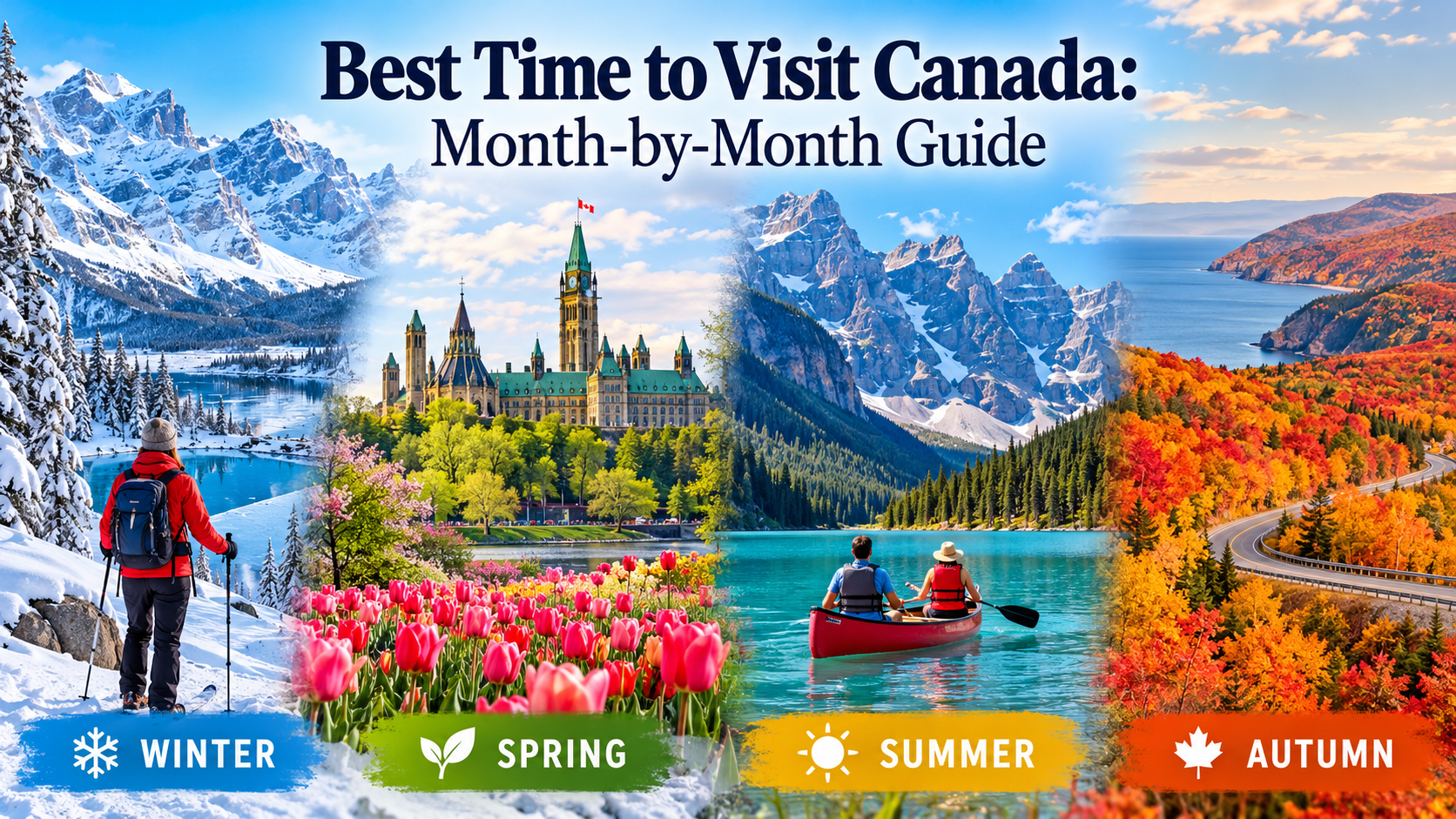
Best Time to Visit Canada: Month-by-Month Guide
Canada is a country of breathtaking landscapes, vibrant cities, beautiful national parks, and unforgettable seasonal experiences. From the snow-covered Rocky Mountains to the colourful forests of Eastern Canada, every season offers something different.
But when is the best time to visit Canada?
For most first-time visitors interested in sightseeing, national parks, and road trips, June through September is an excellent choice. However, the ideal month depends on where you want to travel and what you want to experience.
Winter is perfect for skiing and snowy adventures. Spring brings blooming gardens and quieter cities. Summer offers long daylight hours, hiking, and festivals, while autumn transforms many Canadian landscapes with spectacular fall colours.
In this complete month-by-month Canada travel guide, you’ll discover the best destinations, seasonal activities, weather considerations, crowd levels, and practical travel tips for January through December.
If you’re still choosing your destinations, start with our 25 Best Places to Visit in Canada guide.
Quick Answer: What Is the Best Month to Visit Canada?
There isn’t one perfect month for every traveler, but the following periods are especially useful for planning:
- Best overall for first-time visitors: June to September.
- Best for Canadian Rockies sightseeing: July to September, depending on snow and trail conditions.
- Best for skiing and snowboarding: January to March, depending on the resort.
- Best for autumn colours: Late September through October, depending on the region.
- Best for city sightseeing with fewer summer crowds: May, early June, September, and parts of October.
- Best for summer festivals: June through August.
- Best for Northern Lights: Dark nights from approximately late August through March in suitable northern locations, with no guarantee of sightings.
- Best for potentially lower accommodation prices: Selected spring and autumn periods outside major holidays, although prices vary by destination.
Canada Travel Calendar: January to December
| Month | Recommended destinations | Main experiences |
|---|---|---|
| January | Banff, Whistler, Québec City | Skiing, snow, winter scenery |
| February | Ottawa, Québec City, Jasper | Winter festivals, skating, snow activities |
| March | Whistler, Banff, Vancouver | Spring skiing, early coastal spring |
| April | Vancouver, Victoria, Toronto | Gardens, city sightseeing, spring blooms |
| May | Ottawa, Vancouver, Niagara Falls | Tulips, waterfalls, spring exploration |
| June | Banff, Toronto, Nova Scotia | Hiking, festivals, longer days |
| July | Canadian Rockies, PEI, Calgary | Lakes, road trips, outdoor festivals |
| August | Vancouver Island, Jasper, Newfoundland | Coastal adventures, hiking, wildlife tours |
| September | Banff, Algonquin, Montréal | Hiking, early autumn colours, harvest |
| October | Québec, Ontario, Cape Breton | Fall foliage, scenic drives |
| November | Vancouver, Toronto, Montréal | Museums, city breaks, quieter travel |
| December | Québec City, Banff, Ottawa | Holiday lights, winter celebrations, skiing |
This table describes typical seasonal opportunities, not guaranteed weather, opening dates, or event schedules.
January in Canada: Winter Wonderland
January is one of the coldest months in much of Canada, but it is also an exciting time for travelers who enjoy winter sports and snowy landscapes.
The Canadian Rockies, British Columbia’s ski resorts, and Quebec’s winter destinations are particularly appealing.
Best places to visit in January
Banff National Park, Alberta
Banff is beautiful during winter, with snow-covered mountains, frozen lakes, and spectacular scenery. Visitors can enjoy skiing, snowshoeing, winter walks, and scenic viewpoints.
Whistler, British Columbia
Whistler Blackcomb is a major winter sports destination, attracting skiing and snowboarding enthusiasts from around the world.
Québec City, Quebec
Historic Old Québec looks particularly charming with snow-covered streets, seasonal decorations, and winter architecture.
Things to do in January
- Ski or snowboard at mountain resorts.
- Explore winter walking and snowshoeing trails.
- Photograph frozen waterfalls and snowy mountains.
- Visit indoor museums and cultural attractions.
- Enjoy winter dining and seasonal experiences.
Travel tip: Temperatures can be extremely cold, especially in the Prairies and northern regions. Pack insulated clothing, waterproof boots, gloves, and thermal layers.
February in Canada: Winter Festivals and Snow Adventures
February continues Canada’s winter season and is an excellent month for cold-weather activities.
It is especially attractive for visitors interested in winter celebrations, snow-covered landscapes, and outdoor recreation.
Best places to visit in February
Ottawa, Ontario
Ottawa’s Winterlude celebrations traditionally feature winter-themed activities and attractions. Check the official event schedule for exact dates and programming.
Québec City, Quebec
The Québec Winter Carnival is one of Canada’s best-known winter celebrations, featuring seasonal entertainment and activities.
Jasper National Park, Alberta
Jasper offers dramatic winter landscapes, mountain scenery, and opportunities for guided winter adventures.
Things to do in February
- Attend winter festivals.
- Explore snowy national parks.
- Try snowshoeing or cross-country skiing.
- Enjoy seasonal skating where conditions permit.
- Photograph winter scenery.
Travel tip: Outdoor skating depends on official ice safety assessments. Never assume a lake or canal is safe simply because it appears frozen.
March in Canada: Spring Skiing and Changing Seasons
March is a transitional month. Winter conditions remain common in many regions, while parts of coastal British Columbia begin experiencing milder weather.
This makes March a useful month for travelers who want to combine winter activities with early spring sightseeing.
Best places to visit in March
Whistler, British Columbia
March can provide excellent opportunities for spring skiing, although snow conditions vary by year.
Banff and Lake Louise, Alberta
Mountain resorts often continue operating during March, making the Canadian Rockies attractive for winter sports enthusiasts.
Vancouver, British Columbia
Vancouver generally experiences milder conditions than much of inland Canada, making it a practical destination for city sightseeing.
Things to do in March
- Enjoy spring skiing.
- Explore Vancouver’s waterfront.
- Visit museums and indoor attractions.
- Take scenic mountain drives when road conditions allow.
- Discover local restaurants and neighbourhoods.
Travel tip: March weather can change rapidly. Snow, rain, ice, and sunshine are all possible depending on the region.
April in Canada: Spring Gardens and City Breaks
April marks the arrival of spring in many southern Canadian destinations, although colder regions and mountain areas may still experience winter conditions.
For travelers who enjoy gardens, museums, and city exploration, April can be an appealing month.
Best places to visit in April
Victoria, British Columbia
Victoria is known for its gardens, coastal scenery, historic attractions, and relatively mild spring climate.
Vancouver, British Columbia
Explore Stanley Park, Granville Island, Queen Elizabeth Park, and the city’s diverse neighbourhoods.
Toronto, Ontario
Toronto offers museums, restaurants, galleries, shopping districts, and waterfront attractions. Spring blooms depend on weather conditions.
Things to do in April
- Visit botanical gardens.
- Explore historic neighbourhoods.
- Enjoy city walking tours.
- Discover museums and galleries.
- Photograph spring flowers.
Travel tip: Spring weather is unpredictable. Carry a waterproof jacket and check local forecasts before planning outdoor activities.
May in Canada: A Great Month for Sightseeing
May is one of the most attractive shoulder-season months for visiting many parts of Canada.
Temperatures are generally becoming milder in southern regions, gardens are blooming, and popular summer destinations may be less crowded than during July and August.
Best places to visit in May
Ottawa, Ontario
Ottawa is famous for its spring tulip displays and the Canadian Tulip Festival, subject to annual dates and flowering conditions.
Niagara Falls, Ontario
May can be an enjoyable time to explore waterfall viewpoints, nearby gardens, and the Niagara region.
Vancouver Island, British Columbia
Victoria and other coastal communities offer scenic drives, gardens, beaches, and cultural attractions.
Things to do in May
- Explore gardens and spring flowers.
- Visit Niagara Falls.
- Take scenic city walks.
- Discover waterfront destinations.
- Enjoy quieter sightseeing periods.
Travel tip: Some high-elevation mountain trails remain snow-covered in May. Do not assume summer hiking routes are open.
June in Canada: Start of the Summer Travel Season
June is an excellent time to visit Canada for travelers interested in longer daylight hours, outdoor activities, and the beginning of summer festivals.
Many destinations become increasingly busy as the month progresses.
Best places to visit in June
Banff National Park, Alberta
Banff offers beautiful mountain scenery, lakes, and sightseeing opportunities. Some high-elevation hiking routes may still have snow.
Toronto, Ontario
Toronto’s waterfront, neighbourhoods, parks, and cultural attractions make it an appealing early-summer destination.
Nova Scotia
Halifax, Lunenburg, and coastal communities offer scenic road trips, maritime history, and waterfront experiences.
Things to do in June
- Visit national parks.
- Explore Canadian cities.
- Attend seasonal festivals.
- Enjoy scenic road trips.
- Discover coastal communities.
Travel tip: Book popular national park accommodations and activities early. Availability can become limited during the summer travel season.
July in Canada: Peak Summer Adventures
July is one of the busiest and most popular months for traveling in Canada.
Warm weather in many regions, school holidays, festivals, and longer daylight hours make July ideal for outdoor adventures and family vacations.
Best places to visit in July
Banff and Lake Louise, Alberta
July is popular for mountain sightseeing, turquoise lakes, scenic drives, and hiking. Expect crowds and parking restrictions at major attractions.
Calgary, Alberta
The Calgary Stampede typically takes place in July, bringing rodeo events, concerts, exhibitions, and Western-themed entertainment.
Prince Edward Island
PEI is popular for beaches, coastal drives, charming towns, and summer activities.
Things to do in July
- Explore the Canadian Rockies.
- Enjoy beaches and lakes.
- Attend summer festivals.
- Take family road trips.
- Hike designated mountain trails.
Travel tip: July is often an expensive time to visit popular tourist destinations. Reserve accommodation, transportation, and major attractions well in advance.
August in Canada: Lakes, Mountains and Coastal Adventures
August is another excellent month for outdoor travel across Canada.
Many regions continue experiencing warm summer weather, and visitors can enjoy hiking, beaches, wildlife excursions, and scenic coastal destinations.
Best places to visit in August
Vancouver Island, British Columbia
Explore Victoria, Tofino, Pacific Rim National Park Reserve, and the island’s beautiful beaches.
Jasper National Park, Alberta
Jasper offers mountain scenery, lakes, hiking opportunities, and access to the Icefields Parkway. Verify current park access and any recovery-related closures before traveling.
Gros Morne National Park, Newfoundland
Discover dramatic coastal landscapes, hiking trails, the Tablelands, and Western Brook Pond.
Things to do in August
- Explore national parks.
- Enjoy kayaking and paddleboarding.
- Visit coastal communities.
- Join responsible wildlife-viewing tours.
- Take scenic drives.
Travel tip: Wildfire smoke and fire-related restrictions can affect some Canadian regions during summer. Check official advisories before planning outdoor activities.
September in Canada: One of the Best Months to Travel
September is an excellent month for travelers who prefer cooler temperatures, outdoor sightseeing, and potentially fewer crowds after the main summer holiday period.
Many popular destinations remain accessible, while autumn colours begin appearing in some regions.
Best places to visit in September
Banff National Park, Alberta
September is popular for mountain hiking, scenic photography, and the golden larch season in suitable alpine areas.
Algonquin Provincial Park, Ontario
Autumn colours may begin appearing in September, with peak foliage timing varying each year.
Montréal, Quebec
Explore historic streets, cultural attractions, restaurants, markets, and neighbourhoods in comfortable early-autumn conditions.
Things to do in September
- Enjoy scenic mountain hikes.
- Explore national parks.
- Photograph early fall colours.
- Visit cities and cultural attractions.
- Experience harvest-season activities.
Travel tip: September can bring early snow to high-elevation mountain areas. Check hiking conditions before heading out.
October in Canada: Spectacular Fall Colours
October is one of Canada’s most beautiful months for autumn scenery, especially in Ontario, Quebec, and parts of Atlantic Canada.
Forests turn shades of red, orange, and yellow, creating memorable landscapes for road trips and photography.
Best places to visit in October
Québec City and the Laurentians
Explore historic Québec City and nearby countryside during autumn foliage season.
Algonquin Provincial Park, Ontario
The park is famous for fall colour viewing, although peak colours may occur in late September or early October.
Cape Breton Island, Nova Scotia
The Cabot Trail offers dramatic coastal views and colourful autumn landscapes.
Things to do in October
- Take scenic fall road trips.
- Visit provincial and national parks.
- Photograph autumn forests.
- Explore historic towns.
- Enjoy seasonal harvest experiences.
Travel tip: Peak foliage dates vary by region, elevation, and weather. Follow local fall colour reports rather than relying on a fixed calendar date.
November in Canada: Quiet City Getaways
November is a transitional month between autumn and winter.
Many destinations experience colder temperatures, shorter daylight hours, and fewer tourists. Some seasonal attractions close, but major cities continue offering plenty of indoor experiences.
Best places to visit in November
Vancouver, British Columbia
Vancouver offers museums, restaurants, waterfront attractions, and cultural experiences, although rain is common.
Toronto, Ontario
Explore the Royal Ontario Museum, Art Gallery of Ontario, neighbourhoods, shopping areas, and indoor entertainment.
Montréal, Quebec
Enjoy museums, historic districts, restaurants, and cultural attractions.
Things to do in November
- Visit museums and galleries.
- Explore food markets.
- Enjoy indoor entertainment.
- Discover neighbourhoods.
- Plan a quieter city break.
Travel tip: November can offer lower prices in some destinations, but not everywhere. Compare hotel rates and check seasonal attraction schedules before booking.
December in Canada: Christmas and Winter Magic
December brings festive decorations, winter celebrations, holiday markets, and snowy scenery to many Canadian destinations.
It is a popular time for travelers interested in Christmas experiences and the beginning of winter sports season.
Best places to visit in December
Québec City, Quebec
Old Québec is especially atmospheric during the holiday season, with festive decorations and historic architecture.
Banff, Alberta
Banff offers beautiful winter mountain scenery, seasonal celebrations, and skiing opportunities when conditions permit.
Ottawa, Ontario
Canada’s capital offers seasonal lights, museums, cultural attractions, and winter experiences.
Things to do in December
- Visit holiday markets.
- Enjoy festive light displays.
- Explore snowy mountain towns.
- Try skiing or snowboarding.
- Discover winter festivals and seasonal events.
Travel tip: Christmas and New Year’s holidays can be busy and expensive. Reserve accommodation and transportation early, and prepare for winter travel disruptions.
Best Time to Visit Canada by Region
Canada is enormous, and the best travel season varies considerably between regions.
British Columbia
Best general sightseeing period: May through September.
Vancouver, Victoria, Tofino, and the Okanagan Valley are popular during warmer months. Winter is attractive for skiing in Whistler and other mountain destinations.
Coastal British Columbia generally experiences wetter winters, while interior and mountain regions can have much colder and snowier conditions.
Alberta and the Canadian Rockies
Best general sightseeing period: June through September.
Banff, Jasper, Lake Louise, and the Icefields Parkway attract visitors during summer. July through September often provides better access to higher-elevation hiking routes, depending on snow and weather.
December through March is popular for skiing and winter activities.
Ontario
Best general sightseeing period: May through October.
Toronto, Niagara Falls, Ottawa, and the Thousand Islands offer excellent city and waterfront experiences during warmer months.
Late September through October is especially attractive for autumn foliage in suitable regions.
Quebec
Best general sightseeing period: June through October.
Montréal, Québec City, and Mont-Tremblant are popular for summer festivals, cultural attractions, and autumn colours.
Winter is ideal for travelers interested in snow sports and seasonal celebrations.
Atlantic Canada
Best general sightseeing period: June through October.
Nova Scotia, Prince Edward Island, New Brunswick, and Newfoundland and Labrador offer coastal road trips, beaches, historic towns, and natural landscapes.
Summer is popular for outdoor activities, while autumn offers beautiful scenery in many areas.
Northern Canada
Best travel period: Depends on your activity.
Summer brings long daylight hours and opportunities for hiking and wilderness experiences. Darker months are better suited to Northern Lights viewing, although weather, cloud cover, solar activity, and location affect visibility.
Travel in northern and remote regions often requires additional planning because of limited transportation, accommodation, and seasonal services.
Best Time to Visit Canada for Different Activities
| Travel activity | Generally recommended period |
|---|---|
| Canadian Rockies road trip | June–September |
| Alpine hiking | July–September |
| Skiing and snowboarding | December–March, sometimes longer |
| Fall foliage | September–October |
| Beach vacations | July–August |
| City sightseeing | May–October |
| Northern Lights | Darker months, often late August–March |
| Summer festivals | June–August |
| Spring gardens | April–May |
| Winter festivals | January–February |
| Atlantic Canada coastal drives | June–October |
These are planning guidelines. Actual conditions and operating seasons vary.
When Is the Cheapest Time to Visit Canada?
The cheapest time to visit Canada depends on the destination, type of accommodation, and activities.
Popular summer destinations often charge higher accommodation rates during July and August. Ski resorts may be expensive during winter holidays, while cities can become costly during major festivals, conventions, or sporting events.
Travelers looking to reduce costs can consider:
- Visiting during shoulder seasons such as May, September, or October.
- Avoiding major public holidays and festival weekends.
- Booking accommodation with flexible cancellation policies.
- Comparing flights across different departure dates.
- Using public transportation in major cities.
- Choosing free parks, waterfront walks, and public attractions.
- Traveling between fewer destinations to reduce transportation expenses.
Remember that cheaper months may also have fewer open attractions or less favourable weather.
How to Plan a Canada Trip Based on the Season
1. Choose your main travel experience
Decide whether you want mountain scenery, beaches, city sightseeing, winter sports, autumn colours, or wildlife experiences.
2. Select one or two regions
Canada’s distances are substantial. A one-week vacation is usually better spent exploring one region than attempting to visit both the Pacific and Atlantic coasts.
For destination inspiration, read our 25 Best Places to Visit in Canada article.
3. Check historical climate information
Average weather conditions can help you choose suitable destinations, but they do not guarantee what the weather will be during your visit.
Use Environment and Climate Change Canada’s Climate Normals to research historical weather patterns for specific Canadian locations.
4. Check national park reservations and access
Popular national parks may require reservations for camping, transportation, or certain activities.
Review the official Parks Canada reservation information before finalizing your itinerary.
5. Plan transportation carefully
Major Canadian cities are connected by flights, trains, highways, and regional transportation services, but rural and wilderness destinations may require a rental vehicle or guided transportation.
Check road conditions, seasonal closures, and driving distances before traveling.
6. Pack for your destination
Canadian weather varies considerably by region, elevation, and season.
Bring layers, suitable footwear, rain protection, and any specialized outdoor equipment needed for your activities.
Frequently Asked Questions About the Best Time to Visit Canada
What is the best month to visit Canada for the first time?
July, August, and September are popular choices for first-time visitors interested in sightseeing and outdoor activities. September may be particularly appealing for travelers who prefer somewhat cooler weather and fewer summer holiday crowds.
Is Canada better in summer or winter?
Summer is generally better for road trips, hiking, lakes, and outdoor festivals. Winter is ideal for skiing, snowboarding, snowy scenery, and seasonal celebrations. The best choice depends on your interests.
What is the best time to visit Banff National Park?
June through September is popular for sightseeing, with July through September often providing better access to high-elevation hiking trails. December through March is attractive for skiing and winter scenery.
When can you see the Northern Lights in Canada?
Northern Lights are most easily observed during dark, clear nights in suitable locations, particularly in northern Canada. Late August through March is a useful planning window in many northern destinations, but sightings are never guaranteed.
What is the best month to see fall colours in Canada?
Late September through October is a common fall foliage period in Ontario, Quebec, and parts of Atlantic Canada. Timing varies by region, elevation, and weather conditions.
Is May a good time to visit Canada?
Yes. May is an attractive month for spring gardens, city sightseeing, and some coastal destinations. However, high-elevation hiking trails in the Rockies may remain snowy or closed.
Is September a good time to visit Canada?
September is an excellent choice for many travelers because it offers opportunities for hiking, city sightseeing, scenic road trips, and early autumn colours. Conditions vary by region.
How many days do you need to visit Canada?
A 7–10-day trip can provide a rewarding introduction to one or two nearby regions. For example, travelers might explore Calgary, Banff, and Jasper or Toronto, Niagara Falls, and Ottawa. Visiting several distant regions generally requires more time.
Final Thoughts: Choosing the Best Time to Visit Canada
The best time to visit Canada depends on your travel goals, preferred weather, destinations, and budget.
For mountain adventures, lakes, and national parks, summer and early autumn are excellent choices. For skiing and winter festivals, consider January through March. Spring offers beautiful gardens and quieter city experiences, while autumn is famous for spectacular foliage and scenic road trips.
Whatever month you choose, planning ahead will help you enjoy Canada’s remarkable natural beauty, diverse culture, and unforgettable attractions.
Start exploring our 25 Best Places to Visit in Canada and discover the destinations that match your ideal travel season.
Useful official travel resources:
- Parks Canada – National Parks
- Parks Canada – Reservations
- Environment and Climate Change Canada – Climate Normals
- Government of Canada – Canadian Attractions and Experiences
Travel information is provided for general planning purposes. Weather, operating seasons, park access, event dates, and reservation requirements may change. Always confirm current information with official sources before traveling.