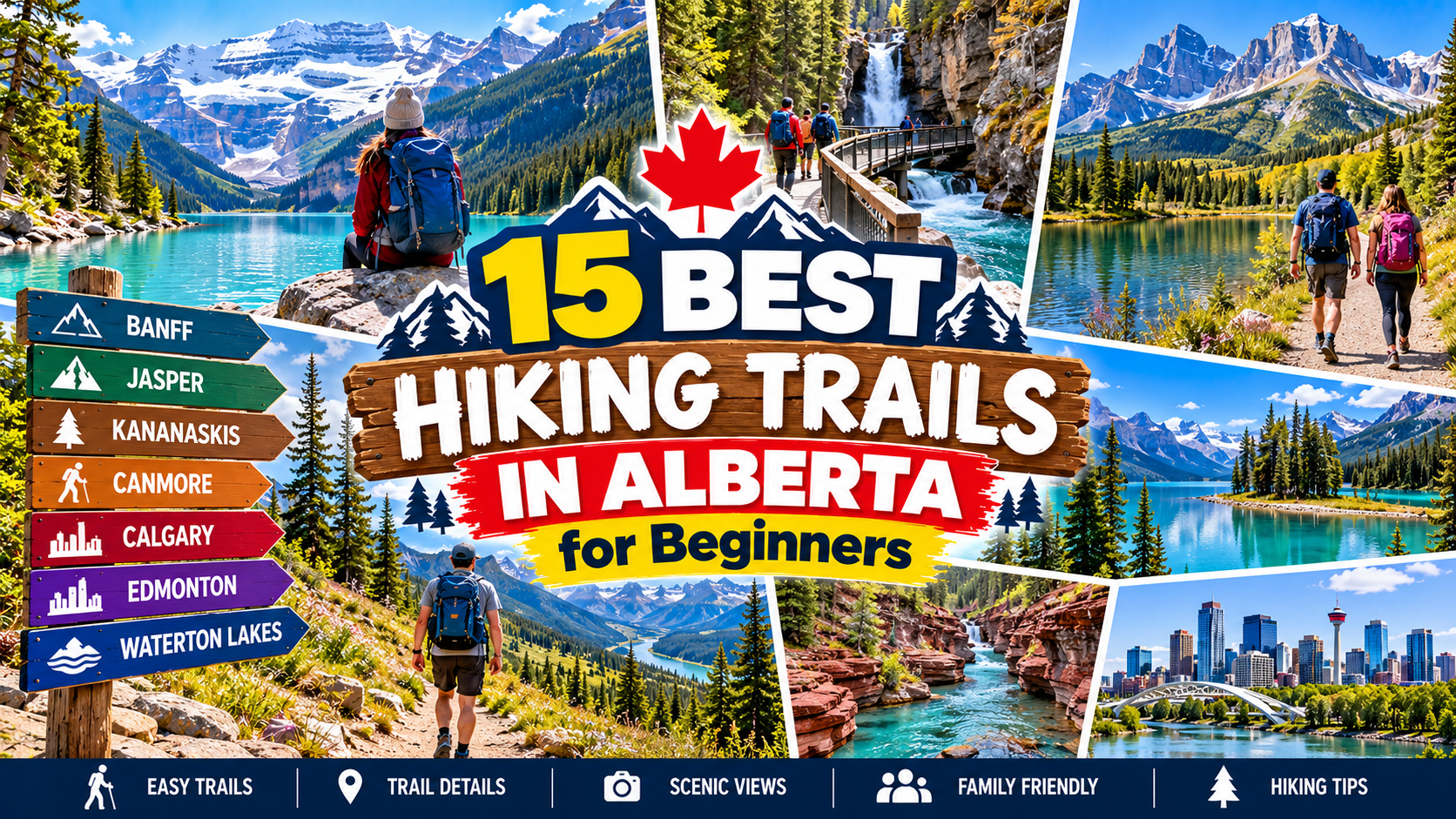
15 Best Hiking Trails in Alberta for Beginners: Easy and Scenic Hikes
Alberta is one of Canada’s most beautiful provinces for hiking. From turquoise mountain lakes and spectacular waterfalls to peaceful forests, river valleys, and prairie landscapes, Alberta offers unforgettable outdoor adventures for every experience level.
The good news is that you don’t need to be an experienced hiker to explore Alberta’s natural beauty.
Some of the best hiking trails in Alberta for beginners are short, well-established routes with rewarding scenery, making them ideal for first-time hikers, families, and travelers looking for manageable outdoor experiences.
Whether you’re visiting Banff, Jasper, Canmore, Kananaskis, Calgary, Edmonton, or Waterton Lakes National Park, you’ll find excellent places to begin your hiking journey.
In this complete guide, we’ll explore 15 beginner-friendly Alberta hikes, including trail distances, estimated hiking times, difficulty levels, highlights, safety tips, and the best seasons to visit.
Quick Comparison: Best Beginner Hiking Trails in Alberta
| Hiking trail | Location | Approximate distance | Difficulty |
|---|---|---|---|
| Johnston Canyon Lower Falls | Banff | 2.2 km return | Easy with some inclines |
| Lake Louise Lakeshore | Lake Louise | 4.6 km return | Easy |
| Johnson Lake Loop | Banff | 2.9 km loop | Easy |
| Fenland Loop | Banff | 1.9 km loop | Easy |
| Stewart Canyon | Lake Minnewanka | 3.2 km return | Easy |
| Grassi Lakes Upper Trail | Canmore | About 4 km return | Easy to moderate |
| Troll Falls | Kananaskis | About 3–4 km return | Easy |
| Wedge Pond Loop | Kananaskis | About 1 km loop | Easy |
| Bow River Pathway | Calgary | Choose a 2–5 km section | Easy |
| Terwillegar Park | Edmonton | Choose a 2–4 km route | Easy to moderate |
| Whitemud Ravine | Edmonton | Choose a 2–4 km route | Easy to moderate |
| Pyramid Lake Island | Jasper | Short island walk | Easy |
| Athabasca Falls | Jasper | Short viewpoint walks | Easy with stairs |
| Red Rock Canyon Loop | Waterton | 0.7 km loop | Easy |
| Blakiston Falls | Waterton | 2 km return | Easy |
Distances are approximate and refer to the suggested route, not necessarily the entire trail network. Hiking times and difficulty depend on weather, trail conditions, fitness, and the route selected.
Important October 2026 update: Johnston Canyon’s usual trailhead-to-falls route is temporarily closed beginning October 13, 2026, for rock slope remediation. Check Parks Canada before visiting or planning this hike.
1. Johnston Canyon Lower Falls — Banff National Park
Johnston Canyon is one of the most popular hiking destinations in Banff National Park.
The trail follows a scenic canyon with flowing water, forest views, and elevated walkways attached to sections of the canyon walls.
Trail information
- Location: Bow Valley Parkway, Banff National Park.
- Distance: Approximately 2.2 km return to Lower Falls.
- Typical hiking time: Around 1 hour.
- Difficulty: Easy in suitable conditions, with uneven surfaces and some steeper sections.
- Main attraction: Waterfalls and canyon scenery.
Why beginners love this trail
Johnston Canyon provides dramatic scenery without requiring a long mountain hike.
The trail features beautiful rock formations, flowing water, and impressive canyon viewpoints.
What to expect
The route follows the canyon through forested terrain and along narrow walkways.
Some sections can become crowded or slippery.
Beginner hiking tips
Wear shoes with reliable traction and avoid rushing on wet surfaces.
Arrive early during busy periods.
Check whether the trail is open before traveling.
Current access note: The usual Lower Falls route is temporarily closed for maintenance work beginning October 13, 2026. Do not attempt to bypass closure signs.
Official trail information: Parks Canada — Banff Hiking.
2. Lake Louise Lakeshore Trail — Banff National Park
Lake Louise is one of the most famous destinations in the Canadian Rockies.
The Lakeshore Trail offers incredible views of turquoise water, mountain peaks, and the surrounding alpine landscape.
Trail information
- Location: Lake Louise, Banff National Park.
- Distance: Approximately 4.6 km return if walking to the far end of the lakeshore and back.
- Difficulty: Easy in suitable conditions.
- Typical time: Approximately 1–2 hours, depending on stops.
- Main attraction: Lake Louise and mountain scenery.
Why beginners love this trail
You can enjoy spectacular mountain views without climbing to a high elevation.
The trail begins near the main lakeshore visitor area.
Best photography spots
- Lake Louise shoreline.
- Mountain reflections.
- Forested lakeside sections.
- Views toward the Victoria Glacier.
Important travel tips
Parking is limited and may be expensive during busy periods.
Public transit and Parks Canada transportation options may be useful.
Stay on designated trails and check seasonal conditions.
Read our 15 Best Places to Visit in Banff National Park for additional sightseeing ideas.
3. Johnson Lake Loop — Banff National Park
Johnson Lake is a peaceful destination near Banff.
The loop trail offers beautiful lake views, forests, and a relatively manageable hiking experience.
Trail information
- Location: Near Banff town.
- Distance: Approximately 2.9 km loop.
- Difficulty: Easy.
- Typical time: Around 1 hour.
- Main attraction: Forest and lake scenery.
Why beginners love it
Johnson Lake is an excellent introduction to mountain hiking.
The loop provides a rewarding nature experience without requiring a long climb.
What you’ll see
- Calm lake water.
- Forested shoreline.
- Mountain views.
- Natural picnic and photography spots.
Hiking tip
Wear appropriate footwear because roots, rocks, and wet sections may create uneven footing.
4. Fenland Loop — Banff National Park
Fenland Loop is a short forest walk near the town of Banff.
It’s a good option for travelers who want to experience nature without committing to a longer mountain hike.
Trail information
- Location: Banff town area.
- Distance: 1.9 km loop.
- Difficulty: Easy.
- Typical time: Approximately 40 minutes.
- Main attraction: Quiet forest scenery.
Why it’s great for first-time hikers
The route is relatively short and offers a peaceful introduction to Alberta’s mountain environment.
What to expect
You’ll walk through a forested landscape with opportunities to observe plants, birds, and the surrounding natural environment.
Hiking tip
Remain alert for wildlife even on trails close to town.
5. Stewart Canyon Trail — Lake Minnewanka
Lake Minnewanka is a beautiful mountain lake near Banff.
The walk toward Stewart Canyon combines lakeside scenery with forest views and a canyon crossing.
Trail information
- Location: Lake Minnewanka, Banff National Park.
- Distance: Approximately 3.2 km return.
- Difficulty: Easy in suitable conditions.
- Typical time: Around 1 hour.
- Main attraction: Lake Minnewanka and Stewart Canyon.
Why beginners love it
This trail provides beautiful scenery with relatively little climbing compared with many mountain routes.
What to expect
The route begins near Lake Minnewanka and follows the shoreline toward Stewart Canyon.
Important wildlife information
Seasonal wildlife restrictions may affect access in the Lake Minnewanka area.
Always check current Parks Canada bulletins and follow any group-size, trail-use, or seasonal restrictions.
6. Grassi Lakes Upper Trail — Canmore
Grassi Lakes is one of the most popular hiking destinations near Canmore.
The lakes are famous for their remarkable blue-green water and surrounding mountain scenery.
Trail information
- Location: Canmore, Alberta.
- Distance: Approximately 4 km return using the easier upper route.
- Difficulty: Easy to moderate.
- Typical time: Approximately 1.5–2 hours.
- Main attraction: Turquoise lakes and mountain views.
Two different routes
There are two main ways to reach Grassi Lakes.
Grassi Lakes Upper Trail: The easier option, following a wider former road through the forest.
Grassi Lakes Interpretive Trail: A more challenging route with steeper terrain and sections that may be unsuitable for inexperienced hikers.
Best option for beginners
Choose the Upper Trail rather than the more difficult interpretive route.
Hiking tips
Stay on designated trails.
Avoid approaching cliff edges.
Check current Alberta Parks trail reports and parking conditions.
A Kananaskis Conservation Pass may be required for vehicles parked in designated areas.
Official information: Alberta Parks.
7. Troll Falls Trail — Kananaskis Country
Troll Falls is a popular waterfall hike in Kananaskis Country.
The trail passes through forested terrain before reaching a beautiful waterfall.
Trail information
- Location: Kananaskis Country.
- Distance: Approximately 3–4 km return, depending on the route.
- Difficulty: Easy in good conditions.
- Typical time: Around 1–1.5 hours.
- Main attraction: Forest scenery and waterfall.
Why beginners love it
The hike is relatively short and provides a rewarding destination.
What to expect
The trail travels through forest and eventually reaches the waterfall viewing area.
Important safety tips
Avoid climbing around waterfall cliffs or crossing barriers.
Winter ice and snow can make the trail more difficult.
Check the current trail report before visiting.
8. Wedge Pond Loop — Kananaskis Country
Wedge Pond is a peaceful destination surrounded by mountain scenery.
The short walking route around the pond is ideal for visitors seeking an easy nature experience.
Trail information
- Location: Kananaskis Country.
- Distance: Approximately 1 km around the pond.
- Difficulty: Easy.
- Typical time: Around 20–40 minutes.
- Main attraction: Mountain reflections and pond scenery.
Why beginners love it
Wedge Pond offers impressive views without requiring a long hike.
Best things to do
- Enjoy a relaxing walk.
- Photograph mountain reflections.
- Observe the surrounding forest.
- Stop for a picnic where permitted.
Hiking tip
Trails can become muddy after rainfall, so wear suitable footwear.
9. Bow River Pathway — Calgary
You don’t need to travel to the mountains to enjoy beautiful hiking and walking routes in Alberta.
Calgary’s Bow River Pathway system offers scenic urban walks along the Bow River.
Trail information
- Location: Calgary.
- Suggested distance: Choose a 2–5 km section.
- Difficulty: Easy on suitable paved sections.
- Typical time: Approximately 30–90 minutes.
- Main attraction: River scenery and city views.
Why beginners love it
The pathway system offers flexibility.
You can select a short walk or extend your route depending on your fitness level.
Scenic areas to explore
- Prince’s Island Park.
- Bow River viewpoints.
- Downtown riverfront pathways.
- Nearby green spaces.
Hiking tip
Watch for cyclists and other pathway users.
Check municipal notices for temporary closures or maintenance.
Official resource: City of Calgary.
10. Terwillegar Park Trails — Edmonton
Edmonton’s River Valley offers excellent opportunities for beginners to explore nature without leaving the city.
Terwillegar Park is particularly popular for walking, hiking, cycling, and outdoor recreation.
Trail information
- Location: Southwest Edmonton.
- Suggested distance: 2–4 km.
- Difficulty: Easy to moderate, depending on the route.
- Typical time: Approximately 30–90 minutes.
- Main attraction: North Saskatchewan River Valley.
Why beginners love it
Terwillegar Park has a variety of routes, allowing visitors to choose a walk suited to their experience.
Highlights
- River Valley scenery.
- Forested trails.
- Open natural spaces.
- Terwillegar Park Footbridge.
- Wildlife and birdwatching opportunities.
Beginner tip
Choose a straightforward paved or well-maintained route for your first visit.
Be aware that the park includes an off-leash dog area.
Official information: Terwillegar Park — City of Edmonton.
11. Whitemud Ravine Trails — Edmonton
Whitemud Ravine is another excellent place for beginners to explore Edmonton’s natural environment.
The ravine features forested trails, creek scenery, and opportunities to observe local wildlife.
Trail information
- Location: Edmonton.
- Suggested distance: 2–4 km.
- Difficulty: Easy to moderate, depending on the section.
- Typical time: Approximately 30–90 minutes.
- Main attraction: Forest and ravine scenery.
Why beginners love it
The trails provide a peaceful natural environment within the city.
What to expect
- Forested walking routes.
- Creekside scenery.
- Birdwatching opportunities.
- Seasonal changes in vegetation.
Hiking tip
Some ravine trails have steep slopes, stairs, or muddy sections.
Choose a route based on official trail maps rather than assuming every section is easy.
Official resource: Edmonton River Valley Trails.
12. Pyramid Lake Island Walk — Jasper National Park
Pyramid Lake is a scenic destination near Jasper town.
The island is connected to the shoreline by a pedestrian bridge and offers beautiful views of the surrounding mountains.
Trail information
- Location: Pyramid Lake, Jasper.
- Distance: A short walk across the bridge and around permitted island paths.
- Difficulty: Easy in suitable conditions.
- Typical time: Approximately 15–30 minutes.
- Main attraction: Pyramid Mountain and lake scenery.
Why beginners love it
This is a great option for travelers who want a short nature walk rather than a longer hike.
Highlights
- Mountain reflections.
- Scenic lake views.
- Forest scenery.
- Photography opportunities.
Important note
Jasper continues to recover from the 2024 wildfire. Confirm the status of visitor areas, trails, and services before traveling.
Official resource: Jasper National Park.
13. Athabasca Falls Viewpoint Walks — Jasper National Park
Athabasca Falls is one of Jasper’s most impressive waterfalls.
The powerful Athabasca River flows through a narrow rocky canyon, creating dramatic scenery.
Trail information
- Location: Jasper National Park.
- Distance: Short walks between designated viewpoints.
- Difficulty: Easy on many developed sections, although stairs and uneven surfaces are present.
- Typical time: Approximately 20–45 minutes.
- Main attraction: Athabasca Falls and canyon views.
Why beginners love it
Visitors can experience a spectacular waterfall without completing a long hike.
What to expect
The viewing area includes developed pathways, stairs, and scenic lookouts.
Safety tips
Stay behind barriers.
Never climb onto wet rocks near the river.
Do not enter restricted areas.
Water currents near the falls are extremely dangerous.
14. Red Rock Canyon Loop — Waterton Lakes National Park
Red Rock Canyon is one of the most accessible scenic attractions in Waterton Lakes National Park.
The canyon is famous for its colourful rock formations and flowing water.
Trail information
- Location: Waterton Lakes National Park.
- Distance: 0.7 km loop.
- Difficulty: Easy.
- Typical time: Approximately 20 minutes.
- Main attraction: Colourful canyon scenery.
Why beginners love it
The short loop provides excellent views without requiring a long hike.
Highlights
- Red and green rock formations.
- Canyon viewpoints.
- Flowing water.
- Interpretive information.
Hiking tip
Some bridges, viewpoints, or sections may be closed for maintenance or safety. Follow posted signs.
Official information: Waterton Short Hikes and Walks.
15. Blakiston Falls Trail — Waterton Lakes National Park
Blakiston Falls is another beginner-friendly hike in Waterton.
The trail leads through scenic surroundings toward waterfall viewpoints.
Trail information
- Location: Waterton Lakes National Park.
- Distance: 2 km return.
- Difficulty: Easy.
- Typical time: Approximately 45 minutes.
- Main attraction: Blakiston Falls.
Why beginners love it
The route offers a manageable distance and a rewarding waterfall destination.
What to expect
Visitors can enjoy forest scenery and views of the waterfall from designated areas.
Hiking tip
Stay on the official trail and avoid climbing near steep or unstable terrain.
Best Hiking Trails in Alberta for Families
Families with younger children may prefer short trails with manageable terrain and interesting scenery.
Good options include:
- Fenland Loop in Banff.
- Johnson Lake Loop near Banff.
- Wedge Pond in Kananaskis.
- Red Rock Canyon Loop in Waterton.
- Selected paved sections of Calgary’s Bow River Pathway.
- Short, suitable routes in Edmonton’s River Valley.
Remember that a trail rated easy for adults may still be challenging for young children.
Consider distance, elevation changes, weather, washrooms, and opportunities to rest.
Best Hiking Trails Near Edmonton for Beginners
If you live in Edmonton or are visiting the city, you don’t need to drive several hours to enjoy nature.
Edmonton’s River Valley provides numerous walking and hiking opportunities.
Recommended beginner areas
Terwillegar Park: Excellent for river views and flexible walking routes.
Whitemud Ravine: A peaceful forest environment with several trail options.
Gold Bar Park: River Valley scenery and walking paths.
Government House Park: River viewpoints and urban nature walks.
Jan Reimer Park: Shared-use pathways accessible from nearby River Valley connections.
Why Edmonton is good for beginner hikers
- Many trails are close to residential neighbourhoods.
- Short routes are available.
- Some pathways are paved.
- You can build hiking fitness gradually.
- Many walks do not require national park admission.
Check the City of Edmonton trail maps before heading out.
Best Hiking Trails Near Calgary for Beginners
Calgary offers access to both urban pathways and nearby mountain destinations.
Recommended areas
Bow River Pathway: Ideal for beginners who prefer paved walking routes.
Prince’s Island Park: A pleasant urban nature experience.
Grassi Lakes Upper Trail: A rewarding beginner-to-intermediate mountain walk near Canmore.
Troll Falls: A relatively short waterfall hike in Kananaskis.
Wedge Pond: A short scenic mountain walk.
Travel tip
Mountain trailheads can become busy during summer weekends.
Start early and check parking requirements before leaving Calgary.
Best Time to Go Hiking in Alberta
Alberta offers different hiking experiences throughout the year.
Spring: April to May
Spring can be a good time for lower-elevation walks in cities and foothills.
However, mountain trails may remain covered in snow or ice.
Summer: June to August
Summer is the most popular hiking season.
Many lower-elevation mountain trails become accessible, although high-elevation routes can remain snowy into summer.
Autumn: September to October
Autumn offers cooler temperatures and beautiful forest colours.
Weather changes can occur quickly, especially in the mountains.
Winter: November to March
Some urban and designated winter walking trails remain accessible.
However, snow, ice, avalanche conditions, and extreme cold can make hiking significantly more challenging.
Beginners should avoid entering avalanche terrain without appropriate training, equipment, and current hazard information.
Read our Best Time to Visit Canada guide for seasonal travel advice.
What to Pack for Your First Alberta Hike
Even a short hike requires preparation.
Beginner hiking essentials
- Comfortable hiking shoes or boots.
- Water.
- Snacks.
- Weather-appropriate clothing.
- Lightweight rain jacket.
- Fully charged phone.
- Offline trail map.
- Sunscreen.
- Hat and sunglasses.
- Small first-aid kit.
- Emergency whistle.
- Appropriate wildlife safety equipment.
Do beginners need hiking poles?
Hiking poles are optional for many short, easy trails.
They can provide additional balance on uneven terrain, but they are not a substitute for proper footwear or safe trail choices.
How much water should you bring?
Water needs depend on temperature, activity level, hike duration, and individual requirements.
Bring enough drinking water for your planned route and allow for delays.
Wildlife Safety While Hiking in Alberta
Alberta is home to wildlife including bears, elk, deer, moose, and other animals.
Wildlife encounters are possible even on popular trails.
Important safety rules
Never feed wildlife.
Feeding animals can create dangerous situations for both people and wildlife.
Keep your distance.
Use binoculars or a zoom lens instead of approaching animals.
Make your presence known.
Talk normally when traveling through areas where visibility is limited.
Carry bear spray where appropriate.
Learn how to carry and use it before hiking in bear country.
Keep dogs under control.
Follow the specific leash rules for the park or trail.
Check official wildlife advisories.
Some trails may close temporarily because of wildlife activity.
Official resource: Parks Canada.
How Much Does Beginner Hiking in Alberta Cost?
Many local hiking routes can be enjoyed without a separate trail-use fee.
However, additional costs may apply.
Possible expenses
- National park admission.
- Kananaskis Conservation Pass.
- Parking.
- Transportation.
- Hiking shoes.
- Outdoor clothing.
- Food and water.
- Shuttle services.
Illustrative hiking equipment budget
| Item | Estimated cost (CAD) |
|---|---|
| Hiking shoes | $60–$150 |
| Small backpack | $25–$70 |
| Water bottle | $10–$30 |
| Rain jacket | $40–$120 |
| Basic first-aid supplies | $15–$35 |
These are approximate shopping budgets, not live retail prices.
Beginners do not need to purchase expensive equipment for every easy walk.
Start with suitable footwear, weather protection, navigation, and essential safety supplies.
How to Plan Your First Alberta Hiking Trip
Follow these simple steps.
Step 1: Choose an easy trail
Select a short route with manageable elevation changes.
Step 2: Check trail conditions
Review official trail reports, closures, and weather warnings.
Step 3: Check parking and permits
Some parks require admission or vehicle passes.
Step 4: Start early
Allow enough daylight and avoid rushing.
Step 5: Tell someone your plans
Share your route and expected return time.
Step 6: Bring essentials
Carry water, food, weather protection, and navigation information.
Step 7: Stay on the designated trail
Avoid shortcuts and unstable terrain.
Step 8: Turn around when necessary
Bad weather, fatigue, or unexpected trail conditions are good reasons to change your plans.
Frequently Asked Questions About Hiking in Alberta
What are the best hiking trails in Alberta for beginners?
Some excellent options include Fenland Loop, Johnson Lake Loop, Lake Louise Lakeshore, Red Rock Canyon Loop, and suitable sections of Edmonton’s River Valley.
What is the easiest hike in Banff?
Fenland Loop and Johnson Lake Loop are popular short hikes. Lake Louise Lakeshore is another approachable option in suitable conditions.
Is Johnston Canyon good for beginners?
Normally, the Lower Falls route is manageable for many beginners, but it includes uneven surfaces and narrow walkways. The usual route is temporarily closed beginning October 13, 2026, so verify access before visiting.
Is Grassi Lakes suitable for beginners?
The easier Grassi Lakes Upper Trail can be suitable for reasonably active beginners. The more difficult interpretive route is not the best first choice.
Are there beginner hiking trails near Edmonton?
Yes. Terwillegar Park, Whitemud Ravine, Gold Bar Park, and other River Valley locations offer short walking routes.
Can beginners hike in Kananaskis?
Yes. Some trails are suitable for beginners, but conditions vary. Troll Falls and Wedge Pond are popular options.
What should I wear for hiking in Alberta?
Wear suitable hiking shoes, comfortable layers, and weather-appropriate outerwear. Carry additional warm clothing when hiking in mountain areas.
Do I need bear spray for hiking in Alberta?
Bear spray is an important safety tool for many hikes in bear country. Learn how to use it properly and follow official wildlife safety guidance.
Do I need a pass to hike in Banff?
Banff National Park generally requires valid park admission. Certain transportation and other services may have additional charges.
Is hiking free in Edmonton?
Many Edmonton River Valley trails are free to access, although parking or specific activities may involve charges.
What is the best month for beginner hiking in Alberta?
June through September is generally popular for many mountain hikes, while urban trails may be suitable during a broader range of months.
Can I hike in Alberta during winter?
Yes, on appropriate trails with suitable equipment and preparation. Snow, ice, severe cold, and avalanche hazards can make winter routes more challenging.
Final Thoughts: Start Exploring Alberta’s Best Beginner Hiking Trails
Alberta offers some of Canada’s most beautiful hiking experiences, and you don’t need advanced skills to enjoy them.
From Lake Louise and Johnson Lake to Grassi Lakes, Troll Falls, Edmonton’s River Valley, and Waterton’s Red Rock Canyon, there are plenty of manageable outdoor adventures.
If you’re completely new to hiking, begin with a short local route.
As your confidence and fitness improve, explore longer trails and more varied terrain.
Always check current trail conditions, respect wildlife, carry appropriate supplies, and choose routes suited to your experience.
The best hike isn’t necessarily the longest or most difficult. It’s the one you can enjoy safely while discovering Alberta’s remarkable landscapes.
Continue exploring on Explore Canada Daily:
- 15 Best Places to Visit in Banff National Park
- Canadian Rockies Road Trip Guide
- 15 Best National Parks in Canada
- Best Time to Visit Canada
- 20 Free Things to Do in Canada
- Canadian Winter Survival Tips for Newcomers
Official hiking resources:
- Parks Canada — Banff Hiking
- Parks Canada — Jasper
- Parks Canada — Waterton Hiking
- Alberta Parks
- City of Edmonton — River Valley Trails
- City of Calgary
Disclaimer: Trail distances, estimated times, access, difficulty, and conditions can change. Closures, weather, wildlife activity, and maintenance may affect routes. Verify current information with official park authorities before hiking.