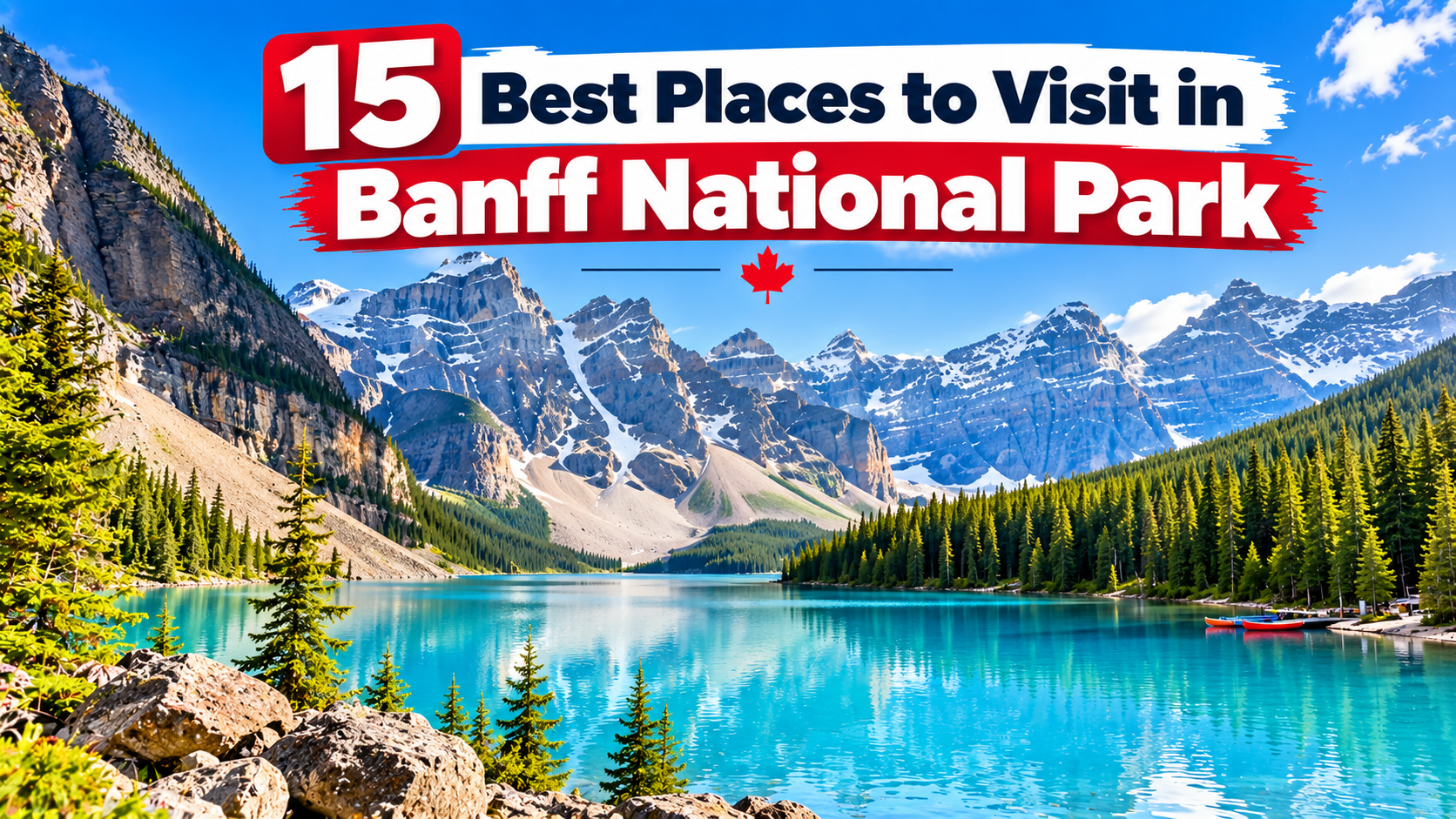
15 Best Places to Visit in Banff National Park: Complete Travel Guide
Banff National Park is one of Canada’s most spectacular travel destinations. Located in the Canadian Rockies of Alberta, this world-famous national park is known for turquoise lakes, snow-covered mountains, beautiful valleys, scenic highways, and unforgettable outdoor adventures.
Whether you’re visiting for the first time or returning to explore more of the Rockies, you’ll discover incredible landscapes throughout the park.
The best places to visit in Banff National Park include Lake Louise, Moraine Lake, Johnston Canyon, Lake Minnewanka, Peyto Lake, Bow Lake, and the charming town of Banff.
In this complete Banff travel guide, we’ll explore 15 must-see destinations, the best time to visit, transportation options, suggested itineraries, and practical tips for planning your trip.
For more Canadian destination inspiration, read our 25 Best Places to Visit in Canada.
Quick Guide: 15 Best Places in Banff National Park
| Destination | Best for | Suggested time |
|---|---|---|
| Lake Louise | Turquoise lake and mountain scenery | 2–4 hours |
| Moraine Lake | Photography and alpine scenery | 2–3 hours |
| Johnston Canyon | Waterfalls and canyon walks | 1.5–3 hours |
| Lake Minnewanka | Scenic lake and boat tours | 1–3 hours |
| Banff Town | Restaurants, shopping and mountain views | 2–4 hours |
| Sulphur Mountain | Panoramic viewpoints | 2–3 hours |
| Bow Falls | Easy sightseeing | 20–40 minutes |
| Vermilion Lakes | Sunrise and sunset photography | 30–60 minutes |
| Two Jack Lake | Picnics and mountain reflections | 1–2 hours |
| Peyto Lake | Elevated lake viewpoint | 45–90 minutes |
| Bow Lake | Scenic Icefields Parkway stop | 30–90 minutes |
| Icefields Parkway | Mountain road trip | Half to full day |
| Cave and Basin | History and heritage | 1–2 hours |
| Sunshine Meadows | Alpine hiking and wildflowers | Half to full day |
| Tunnel Mountain | Hiking and viewpoints | 2–3 hours |
Suggested times are approximate and depend on weather, accessibility, transportation, and visitor preferences.
1. Lake Louise – Banff’s Most Famous Lake
Lake Louise is one of the most recognizable natural attractions in Canada.
Surrounded by towering mountains and glaciers, the lake is famous for its brilliant turquoise water during the warmer months.
Visitors can enjoy lakeside walks, mountain photography, seasonal canoeing, and hiking trails.
Best things to do at Lake Louise
- Walk along the lakeshore.
- Photograph the surrounding mountains.
- Enjoy seasonal canoeing.
- Explore suitable hiking trails.
- Visit viewpoints near the lake.
- Admire the historic Fairmont Château Lake Louise.
Best time to visit: June through September for unfrozen lake scenery, although the lake can remain partially frozen into spring.
Travel tip: Parking is extremely limited during the busy season. Reserve a Parks Canada shuttle or use public transportation where available.
Official information: Parks Canada – Lake Louise and Moraine Lake
2. Moraine Lake – Iconic Turquoise Waters
Moraine Lake is one of the most photographed destinations in the Canadian Rockies.
Located in the Valley of the Ten Peaks, this stunning alpine lake is famous for its turquoise water and dramatic mountain backdrop.
The lake is especially beautiful during summer and early autumn.
Best things to do at Moraine Lake
- Visit the Rockpile viewpoint.
- Photograph the Valley of the Ten Peaks.
- Walk along the lakeshore.
- Enjoy seasonal canoeing when available.
- Explore permitted hiking trails.
Best time to visit: June through September.
Important transportation information: Personal vehicles are not permitted on Moraine Lake Road. Visitors generally need a Parks Canada shuttle, eligible transit service, or authorized commercial transportation.
Moraine Lake’s visitor access is seasonal, and the road closes during winter.
Travel tip: Reserve transportation before your visit. Do not assume you can drive your personal vehicle directly to the lake.
3. Johnston Canyon – Beautiful Waterfalls and Canyon Trails
Johnston Canyon is one of the most popular hiking destinations in Banff National Park.
The canyon features a scenic trail with forest sections, elevated walkways, rushing water, and beautiful waterfalls.
Visitors can hike toward the Lower Falls and Upper Falls, depending on trail conditions and available time.
Highlights of Johnston Canyon
- Lower Falls.
- Upper Falls.
- Canyon viewpoints.
- Forest scenery.
- Seasonal ice formations.
Best time to visit: Late spring through autumn for general hiking; winter visits require additional preparation.
Travel tip: Trails may be icy during colder months. Wear suitable footwear and check official trail conditions.
4. Lake Minnewanka – Scenic Lake and Mountain Views
Lake Minnewanka is a large mountain lake located a short drive from Banff town.
Surrounded by dramatic peaks, the lake offers beautiful scenery and opportunities for sightseeing.
Things to do at Lake Minnewanka
- Enjoy lakeside viewpoints.
- Take a seasonal boat cruise.
- Photograph mountain reflections.
- Explore permitted walking areas.
- Enjoy a picnic.
- Observe wildlife from a safe distance.
Best time to visit: May through September for many outdoor experiences.
Travel tip: Some nearby trails may have seasonal wildlife restrictions. Check Parks Canada notices before hiking.
5. Banff Town – The Heart of the Canadian Rockies
Banff town is a charming mountain community surrounded by spectacular Rocky Mountain scenery.
It offers restaurants, cafés, shops, accommodation, galleries, and easy access to nearby attractions.
Best things to do in Banff Town
- Walk along Banff Avenue.
- Explore local shops.
- Visit restaurants and cafés.
- Photograph the mountain backdrop.
- Walk along the Bow River.
- Discover local museums and galleries.
Best time to visit: Year-round.
Travel tip: Downtown parking can be busy. Consider using public transportation or walking between nearby attractions.
6. Sulphur Mountain – Spectacular Panoramic Views
Sulphur Mountain is one of the best destinations for panoramic views of Banff and the surrounding mountain ranges.
Visitors can reach the upper mountain area using the Banff Gondola or a challenging hiking trail, subject to operating conditions.
Highlights of Sulphur Mountain
- Panoramic Rocky Mountain views.
- Scenic gondola experience.
- Elevated observation areas.
- Mountain photography.
- Interpretive exhibits.
Best time to visit: Year-round when conditions and services permit.
Travel tip: Mountain weather can change quickly. Bring warm layers even during summer.
Official attraction website: Banff Gondola
7. Bow Falls – An Easy Scenic Stop
Bow Falls is a beautiful waterfall located near Banff town.
Unlike some mountain attractions requiring longer hikes, Bow Falls is relatively easy to include in a short sightseeing itinerary.
Things to do at Bow Falls
- Enjoy waterfall viewpoints.
- Photograph the Bow River.
- Explore designated walking paths.
- Admire the surrounding scenery.
Suggested visiting time: 20–40 minutes.
Travel tip: Stay behind safety barriers and avoid approaching dangerous river edges.
8. Vermilion Lakes – Sunrise and Sunset Photography
Vermilion Lakes is one of the most peaceful and photogenic areas near Banff town.
The lakes are especially beautiful during sunrise and sunset, when mountain reflections can appear on calm water.
Highlights of Vermilion Lakes
- Mount Rundle reflections.
- Scenic photography.
- Wetland landscapes.
- Birdwatching.
- Sunrise and sunset viewpoints.
Best time to visit: Early morning or evening.
Travel tip: Respect wildlife, avoid blocking roads, and stay within permitted access areas.
9. Two Jack Lake – A Relaxing Mountain Escape
Two Jack Lake is a beautiful destination near Lake Minnewanka.
It offers mountain views, forest scenery, and opportunities for quiet relaxation.
Things to do at Two Jack Lake
- Enjoy a lakeside picnic.
- Photograph Mount Rundle.
- Relax near the shoreline.
- Explore designated recreation areas.
- Enjoy permitted water activities when conditions allow.
Best time to visit: Late spring through early autumn.
Travel tip: Arrive early during summer weekends because parking and picnic areas may be busy.
10. Peyto Lake – One of the Rockies’ Most Beautiful Viewpoints
Peyto Lake is famous for its remarkable turquoise colour and distinctive shape.
Located along the Icefields Parkway, the lake is commonly viewed from an elevated viewpoint.
Highlights of Peyto Lake
- Brilliant turquoise water.
- Mountain scenery.
- Panoramic photography.
- Forested alpine landscapes.
Best time to visit: Summer through early autumn.
Travel tip: The viewpoint access trail can be snowy or icy outside the summer season. Check current conditions before visiting.
11. Bow Lake – A Beautiful Icefields Parkway Stop
Bow Lake is one of the most scenic lakes along the Icefields Parkway.
Surrounded by rugged mountains and glacier-fed landscapes, it offers beautiful roadside sightseeing opportunities.
Things to do at Bow Lake
- Enjoy mountain photography.
- Walk near designated shoreline areas.
- Relax at scenic viewpoints.
- Explore suitable nearby trails.
- Admire reflections on calm days.
Best time to visit: June through September for summer scenery.
Travel tip: Weather conditions can change quickly at higher elevations, even during summer.
12. Icefields Parkway – One of Canada’s Most Scenic Drives
The Icefields Parkway connects the Lake Louise area with Jasper National Park.
This famous mountain highway passes through dramatic valleys, glacier landscapes, turquoise lakes, waterfalls, and spectacular viewpoints.
Highlights along the Icefields Parkway
- Herbert Lake.
- Bow Lake.
- Peyto Lake.
- Waterfowl Lakes.
- Mistaya Canyon.
- Saskatchewan River Crossing.
- Columbia Icefield area farther north.
Suggested visiting time: Allow a full day for a relaxed sightseeing journey.
Important: Some attractions along the highway are outside Banff National Park, within Jasper National Park.
Travel tip: Check road conditions, fuel availability, and weather before departing. Winter driving can be hazardous, and some services operate seasonally.
13. Cave and Basin National Historic Site – Discover Canada’s Park History
Cave and Basin National Historic Site is an important cultural and historical attraction in Banff.
It helps visitors understand the development of Canada’s national parks system and the significance of the area’s natural hot springs.
Things to do at Cave and Basin
- Explore historical exhibits.
- Learn about the hot springs.
- Discover national park history.
- Walk through designated interpretive areas.
- Explore the site’s cultural heritage.
Suggested visiting time: 1–2 hours.
Travel tip: This is a historic attraction, not a public swimming facility.
Official information: Parks Canada – Cave and Basin
14. Sunshine Meadows – Alpine Wildflowers and Mountain Hiking
Sunshine Meadows is a beautiful alpine destination near Banff.
During the summer hiking season, visitors can enjoy mountain scenery, wildflower meadows, and scenic walking routes.
Highlights of Sunshine Meadows
- Alpine wildflowers.
- Mountain viewpoints.
- Seasonal hiking trails.
- Scenic photography.
- High-elevation landscapes.
Best time to visit: Summer, depending on snow conditions and lift or shuttle operations.
Travel tip: High-elevation trails may remain snowy into early summer. Check access, operating schedules, and hiking conditions before visiting.
15. Tunnel Mountain – A Popular Banff Hiking Experience
Tunnel Mountain is a popular hiking destination close to Banff town.
The trail rewards hikers with views of the Bow Valley, surrounding mountains, and parts of Banff.
Highlights of Tunnel Mountain
- Mountain viewpoints.
- Forest scenery.
- Bow Valley panoramas.
- Outdoor exercise.
- Photography opportunities.
Suggested visiting time: Approximately 2–3 hours, depending on fitness and conditions.
Travel tip: Carry water, wear suitable footwear, and check for snow or ice before hiking.
Best Time to Visit Banff National Park
Banff is a year-round destination, but the experience changes dramatically with the seasons.
Spring: March to May
Spring brings changing weather and quieter sightseeing opportunities.
Some mountain trails remain covered in snow, and high-elevation lakes may still be frozen.
Summer: June to August
Summer is the most popular season for visiting Banff.
Visitors can enjoy turquoise lakes, mountain scenery, hiking, and scenic drives.
July and August are particularly busy.
Autumn: September to November
September is an excellent month for mountain photography and hiking.
Golden larch trees create beautiful alpine scenery during suitable autumn conditions.
Snow may arrive early at higher elevations.
Winter: December to February
Winter transforms Banff into a snowy mountain destination.
Popular activities include skiing, snowshoeing, winter sightseeing, and seasonal outdoor experiences.
Best overall period for first-time visitors: June through September.
For more seasonal information, read our Best Time to Visit Canada: Month-by-Month Guide.
Suggested 3-Day Banff National Park Itinerary
Day 1: Banff Town and Nearby Attractions
Morning
- Explore Banff Avenue.
- Visit Bow Falls.
- Enjoy scenic Bow River viewpoints.
Afternoon
- Visit Cave and Basin National Historic Site.
- Explore nearby walking areas.
Evening
- Visit Vermilion Lakes for sunset photography.
- Enjoy dinner in Banff town.
Day 2: Lake Louise and Moraine Lake
Morning
- Travel to the Lake Louise Park and Ride.
- Take your reserved shuttle to your first lake.
- Explore Lake Louise or Moraine Lake.
Afternoon
- Use the Lake Connector shuttle, if operating and included with your ticket.
- Visit the second lake.
- Return to the Park and Ride.
Evening
- Return to Banff town.
- Enjoy a relaxed evening.
Important: This itinerary works only during the appropriate seasonal shuttle operating period. Reserve transportation in advance.
Day 3: Johnston Canyon and Scenic Lakes
Morning
- Visit Johnston Canyon.
- Explore the Lower Falls or Upper Falls, depending on conditions.
Afternoon
- Visit Lake Minnewanka.
- Explore Two Jack Lake.
Evening
- Enjoy mountain scenery.
- Return to Banff town.
Alternative: Replace Day 3 with a full-day Icefields Parkway sightseeing drive to Bow Lake and Peyto Lake.
How to Get to Banff National Park
From Calgary
Calgary is one of the most common arrival points for Banff visitors.
Banff town is approximately 125–130 kilometres from Calgary, depending on the starting point.
Driving typically takes around 1.5–2 hours under favourable conditions.
From Calgary International Airport
Visitors can travel to Banff using airport shuttle services, rental cars, or authorized private transportation.
From Edmonton
Banff is accessible by road from Edmonton.
The journey is considerably longer than from Calgary, so visitors should allow sufficient driving time and check weather conditions.
Getting Around Banff
Transportation options include:
- Roam Public Transit.
- Parks Canada shuttles.
- Licensed commercial tours.
- Rental vehicles for permitted road access.
- Walking and cycling in suitable areas.
Important: A rental car does not provide access to Moraine Lake Road, which is closed to personal vehicles.
Where to Stay in Banff National Park
Banff Town
Best for visitors who want restaurants, shops, accommodation, and access to public transportation.
Lake Louise Village
Convenient for exploring the Lake Louise area and nearby attractions.
Canmore
Located outside Banff National Park, Canmore offers additional accommodation options and mountain scenery.
Travelers staying in Canmore should account for transportation time to park attractions.
Campgrounds
Banff National Park offers camping opportunities, many of which require reservations.
Check the Parks Canada reservation service before planning a camping trip.
Banff National Park Travel Tips
1. Book popular transportation early
Lake Louise and Moraine Lake are extremely popular during summer.
Reserve shuttle transportation in advance.
2. Purchase the appropriate park entry pass
Visitors generally need a valid national park pass, subject to applicable exemptions or special admission programs.
3. Start sightseeing early
Early mornings may offer quieter experiences at some attractions.
4. Prepare for mountain weather
Bring warm layers, waterproof clothing, and comfortable footwear.
5. Respect wildlife
Never feed wildlife or approach wild animals for photographs.
6. Check trail conditions
Mountain trails may be closed because of snow, wildlife activity, or maintenance.
7. Allow extra driving time
Mountain roads can be busy, especially during summer weekends.
8. Download offline maps
Mobile coverage may be limited in some areas.
9. Follow parking regulations
Never park on road shoulders or in restricted areas.
10. Check official Parks Canada updates
Closures, transportation schedules, and visitor restrictions can change.
For broader travel planning advice, read our First-Time Visitor’s Guide to Canada.
Frequently Asked Questions About Banff National Park
What are the most beautiful places in Banff National Park?
Lake Louise, Moraine Lake, Peyto Lake, Bow Lake, Lake Minnewanka, and Vermilion Lakes are among the most scenic destinations.
How many days do you need in Banff?
Three to four days is a good starting point for visiting major attractions. Five to seven days allows more time for hiking and scenic drives.
Can you visit Banff without a car?
Yes. Visitors can use public transportation, Parks Canada shuttles, and licensed tours to reach many popular attractions.
Can you drive to Moraine Lake?
Personal vehicles are not permitted on Moraine Lake Road. Visitors must use an authorized transportation option or qualify for a specific access exemption.
Is Lake Louise open year-round?
The Lake Louise area is accessible throughout the year, although parking, weather, and seasonal activities affect how visitors can experience it.
What is the best month to visit Banff?
July, August, and September are popular for turquoise lakes and hiking. September can also offer beautiful autumn scenery.
Is Banff expensive to visit?
Banff can be expensive during peak summer and winter holiday periods. Accommodation, dining, and paid activities can significantly affect the cost.
Can you visit Lake Louise and Moraine Lake in one day?
Yes, during the operating season, suitable shuttle transportation can allow visitors to see both lakes in one day.
Are there free attractions in Banff?
Many viewpoints, public walking areas, and scenic stops do not charge separate attraction admission, although national park entry fees and transportation or parking costs may apply.
Is Banff suitable for families?
Yes. Banff offers scenic lakes, easy walking areas, family-friendly attractions, and outdoor experiences for different ages and abilities.
Final Thoughts: Exploring the Best Places in Banff National Park
Banff National Park is one of Canada’s most unforgettable destinations.
From the turquoise waters of Lake Louise and Moraine Lake to the waterfalls of Johnston Canyon and the spectacular viewpoints along the Icefields Parkway, the park offers extraordinary natural beauty.
For first-time visitors, spending at least three days in Banff provides an opportunity to explore several major attractions without rushing.
Plan your transportation carefully, reserve popular services early, and check official park conditions before traveling.
Whether you’re planning a summer road trip, autumn photography adventure, or winter mountain getaway, Banff National Park offers remarkable experiences in every season.
Continue exploring Canada:
- 25 Best Places to Visit in Canada
- Best Time to Visit Canada: Month-by-Month Guide
- First-Time Visitor’s Guide to Canada
- Vancouver Travel Guide for First-Time Visitors
Official Banff travel resources:
- Parks Canada – Banff National Park
- Parks Canada – Lake Louise and Moraine Lake Transportation
- Parks Canada – Trail Conditions
- Parks Canada – Reservations
- Banff & Lake Louise Tourism
Disclaimer: This guide is intended for general travel planning. Park access, shuttle schedules, road conditions, seasonal closures, admission fees, and attraction operations may change. Always verify current information with Parks Canada and relevant operators before traveling.