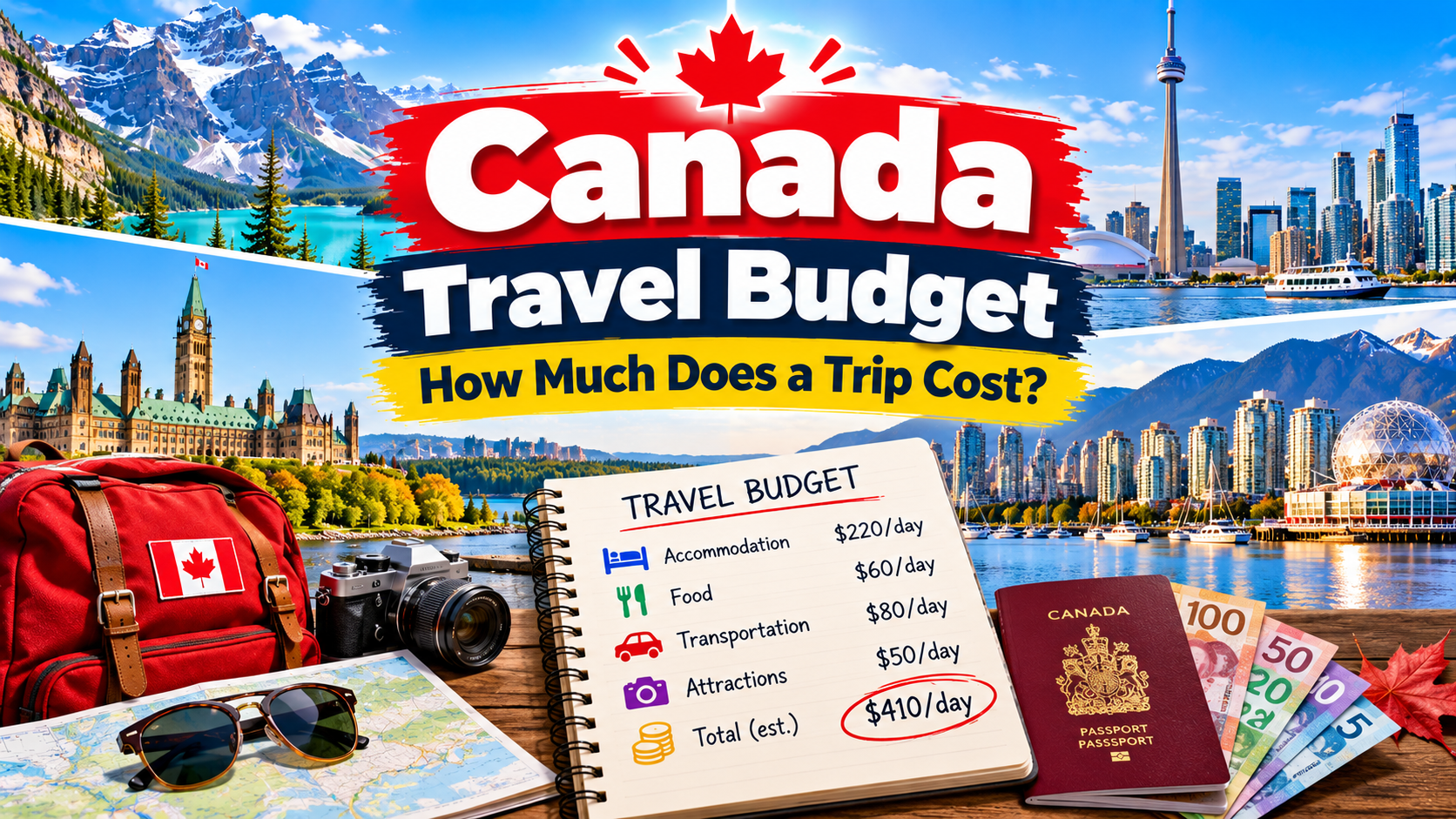
Canada Travel Budget: How Much Does a Trip Cost? Complete Planning Guide
Planning a trip to Canada is exciting, but one of the first questions most travelers ask is: How much does a trip to Canada cost?
Canada is known for its spectacular mountains, vibrant cities, beautiful national parks, and unforgettable road trips. However, travel expenses can vary considerably depending on where you visit, when you travel, and how you prefer to explore.
A week exploring Toronto using public transportation can cost very differently from a seven-day Canadian Rockies road trip with a rental vehicle and mountain hotels.
This Canada travel budget guide breaks down accommodation, food, transportation, attractions, and other common expenses. You’ll also find sample budgets for one-week and two-week vacations, money-saving tips, and practical advice for planning an affordable Canadian adventure.
All amounts are in Canadian dollars (CAD) unless stated otherwise.
How Much Does a Trip to Canada Cost?
For an independent traveler, a reasonable starting estimate is approximately CAD $120–$500 or more per person per day, depending on travel style.
These estimates assume travelers are already in Canada and exclude international airfare.
| Travel style | Estimated daily cost per person |
|---|---|
| Budget traveler | $120–$200 |
| Mid-range traveler | $200–$350 |
| Comfort or luxury traveler | $350–$500+ |
These are illustrative planning ranges, not guaranteed prices. They assume a mix of typical accommodation, meals, local transportation, and sightseeing. Shared hotel rooms may reduce per-person costs, while solo travelers can pay considerably more.
For a seven-day vacation, this translates into a broad starting budget of approximately:
- Budget: CAD $840–$1,400 per person.
- Mid-range: CAD $1,400–$2,450 per person.
- Comfort or luxury: CAD $2,450–$3,500+ per person.
International flights, visas, travel insurance, major intercity transportation, and expensive special activities may need to be added separately.
1. Accommodation Costs in Canada
Accommodation is often the largest expense in a Canadian travel budget.
Hotel prices vary depending on the city, season, location, and availability.
Major tourist destinations such as Vancouver, Toronto, Banff, Lake Louise, and Jasper can be particularly expensive during popular travel periods.
Estimated accommodation prices
| Accommodation type | Approximate nightly price per room or bed |
|---|---|
| Hostel dorm bed | $40–$90 |
| Budget hotel or motel room | $110–$190 |
| Mid-range hotel room | $180–$320 |
| Upscale hotel room | $300–$600+ |
| Mountain resort hotel room | $250–$650+ |
| Campsite | $25–$70+ |
These estimates are illustrative and may exclude taxes, parking, resort fees, or other charges. Some destinations can fall outside these ranges.
Ways to save on accommodation
Book early: Popular destinations can become expensive as availability decreases.
Stay near public transportation: In large cities, a hotel near a subway or SkyTrain station may be more economical than a downtown hotel.
Consider nearby communities: Canmore, for example, can provide alternatives to accommodation inside Banff town, although rates are not always lower.
Travel outside peak periods: Shoulder-season accommodation may be more affordable.
Compare total prices: Check taxes, cancellation policies, parking charges, and extra fees before booking.
Example: Seven nights in a mid-range hotel
At an illustrative nightly rate of CAD $220:
7 nights × $220 = CAD $1,540 per room, before applicable taxes and fees.
If two adults share the room, the base accommodation cost is approximately CAD $770 per person.
2. Food Costs in Canada
Canada offers everything from affordable takeaway meals to upscale dining.
Travelers can enjoy local cafés, food markets, international restaurants, grocery stores, and regional specialties.
Your food budget depends heavily on how often you eat at restaurants.
Typical meal budget estimates
| Food expense | Estimated cost per person |
|---|---|
| Coffee or tea | $3–$7 |
| Simple breakfast | $8–$18 |
| Fast-food or takeaway meal | $12–$20 |
| Casual restaurant lunch | $18–$30 |
| Restaurant dinner | $25–$50+ |
| Daily groceries for simple meals | $15–$30 |
Restaurant taxes and tips may be additional.
Suggested daily food budgets
Budget traveler: CAD $25–$45.
Mid-range traveler: CAD $45–$80.
Higher-end traveler: CAD $80–$150+.
How to save money on food
- Choose accommodation with a kitchen or kitchenette.
- Buy breakfast items and snacks from grocery stores.
- Carry a reusable water bottle.
- Eat at food courts and casual restaurants.
- Explore public markets.
- Compare restaurant menus before ordering.
- Plan a mix of restaurant meals and groceries.
Travel tip: Restaurant menu prices often do not include sales tax or gratuities. Allow extra money for both.
3. Transportation Costs in Canada
Canada is a large country, and transportation can become a significant expense when visiting multiple regions.
Your transportation costs depend on whether you’re exploring one city, traveling between provinces, or taking a road trip.
Public transportation
Major Canadian cities offer buses, trains, or other transit services.
For budget travelers, public transportation is often more affordable than renting a vehicle.
A useful planning allowance is approximately CAD $8–$20 per person per sightseeing day, depending on the city and number of trips.
Some visitors may spend less, especially when using day passes or walking.
Rental cars
A rental vehicle can be convenient for exploring the Canadian Rockies, smaller towns, and destinations outside major transit networks.
Illustrative daily rental estimates:
| Vehicle type | Approximate daily rental cost |
|---|---|
| Economy car | $50–$90 |
| Standard sedan | $60–$110 |
| SUV | $80–$160 |
| Minivan or larger SUV | $110–$220+ |
Rental prices can rise substantially during peak seasons and at busy airports.
These estimates may exclude insurance, taxes, fuel, parking, additional drivers, and one-way rental fees.
Fuel costs
Fuel prices vary by province and over time.
For example, consider a vehicle that uses 8 litres per 100 kilometres.
For a 1,000-kilometre road trip:
1,000 km × 8 L ÷ 100 km = 80 litres
At an assumed fuel price of CAD $1.60 per litre:
80 litres × $1.60 = CAD $128
This is an example calculation, not a current fuel-price quote.
Domestic flights
Domestic flights may be useful when traveling between distant Canadian cities.
Prices depend on route, season, luggage, and booking conditions.
A practical preliminary allowance might be CAD $150–$500+ for a one-way flight on many routes, but actual fares can be much lower or higher.
Intercity trains and buses
Trains and buses connect selected cities and regions.
They can be convenient alternatives to flying or driving, although routes, frequencies, and prices vary considerably.
Official transportation resources:
4. Sightseeing and Attraction Costs
Canada has many free attractions, but popular paid experiences can increase your budget.
Examples of paid activities
- Observation towers.
- Museums and aquariums.
- Guided city tours.
- Boat cruises.
- Mountain gondolas.
- Wildlife tours.
- Skiing and snowboarding.
- National park admission.
- Guided glacier experiences.
For general budgeting, consider these illustrative allowances:
| Sightseeing style | Daily allowance per person |
|---|---|
| Mostly free attractions | $0–$20 |
| Mix of free and paid attractions | $20–$60 |
| Frequent premium experiences | $60–$150+ |
Some individual premium experiences can cost considerably more.
Free sightseeing alternatives
Canada offers many memorable experiences without separate admission fees.
Examples include:
- Stanley Park in Vancouver.
- Toronto’s Harbourfront.
- Mount Royal Park in Montreal.
- Ottawa’s public waterfront pathways.
- Edmonton’s River Valley.
- Calgary’s Prince’s Island Park.
- Public beaches and neighbourhood walks.
For more ideas, read our 20 Free Things to Do in Canada.
Important: National parks may require admission fees even when their viewpoints and trails have no separate attraction charge.
5. How Much Does a 7-Day Trip to Canada Cost?
Let’s compare three illustrative seven-day travel budgets for one person.
These scenarios assume a seven-day visit with six hotel nights and no international flights.
| Expense | Budget | Mid-range | Comfort |
|---|---|---|---|
| Accommodation share | $360 | $840 | $1,500 |
| Food | $245 | $420 | $700 |
| Local transportation | $80 | $150 | $250 |
| Attractions | $70 | $210 | $420 |
| Miscellaneous | $95 | $130 | $230 |
| Estimated total | $850 | $1,750 | $3,100 |
These examples assume the accommodation costs shown are each traveler’s share, which may involve room sharing. They exclude international flights, major intercity journeys, travel insurance, and other trip-specific expenses.
Budget traveler
A budget traveler can save money by choosing hostels or shared accommodation, using public transportation, buying groceries, and focusing on free attractions.
Mid-range traveler
A mid-range traveler may stay in comfortable hotels, eat at restaurants regularly, and visit a combination of free and paid attractions.
Comfort traveler
A comfort-focused traveler may choose premium hotels, taxis or private transportation, upscale dining, and additional paid experiences.
6. How Much Does a 10-Day Trip to Canada Cost?
A ten-day vacation offers more time to explore multiple destinations.
Using the daily planning ranges introduced earlier:
| Travel style | Estimated 10-day cost per person |
|---|---|
| Budget | $1,200–$2,000 |
| Mid-range | $2,000–$3,500 |
| Comfort or luxury | $3,500–$5,000+ |
These estimates exclude international airfare and may not fully cover expensive domestic flights, long-distance rental vehicles, or premium tours.
Example 10-day itinerary
Days 1–3: Toronto.
Days 4–5: Niagara Falls and surrounding area.
Days 6–7: Ottawa.
Days 8–10: Montreal.
This itinerary covers selected destinations in Ontario and Quebec.
Budget separately for intercity transportation and any overnight travel.
7. How Much Does a 14-Day Trip to Canada Cost?
Two weeks provides more time to explore Canada, but the country is too large to see completely in one trip.
For a 14-day vacation, approximate starting budgets are:
| Travel style | Estimated 14-day cost per person |
|---|---|
| Budget | $1,680–$2,800 |
| Mid-range | $2,800–$4,900 |
| Comfort or luxury | $4,900–$7,000+ |
These ranges exclude international airfare and may need adjustments for major intercity journeys.
Example 14-day Western Canada itinerary
Days 1–3: Vancouver.
Days 4–5: Whistler and surrounding areas.
Day 6: Travel to Calgary.
Days 7–10: Banff and Lake Louise.
Days 11–12: Icefields Parkway and Jasper.
Days 13–14: Return toward Calgary and departure.
This itinerary includes significant travel between British Columbia and Alberta.
The transfer from Whistler to Calgary requires careful planning, and a flight or additional travel time may be more practical than a long drive.
For mountain road trip advice, read our Canadian Rockies Road Trip Planning Guide.
8. Canada Travel Costs by Destination
Different Canadian destinations have different accommodation and transportation costs.
The following figures are broad illustrative daily budgets per person for mid-range travel, excluding major intercity transportation and international flights.
| Destination | Estimated daily budget |
|---|---|
| Toronto | $200–$350 |
| Vancouver | $220–$380 |
| Montreal | $170–$300 |
| Ottawa | $170–$300 |
| Calgary | $170–$300 |
| Edmonton | $160–$280 |
| Banff and Lake Louise | $250–$450+ |
| Jasper | $220–$400+ |
| Halifax | $180–$320 |
Actual prices can vary significantly, especially during major events, summer holidays, and periods of limited accommodation availability.
Is Toronto expensive?
Toronto can be expensive for accommodation and dining, particularly downtown.
However, public transportation and free attractions help reduce costs.
Read our 15 Best Things to Do in Toronto guide.
Is Vancouver expensive?
Vancouver is often a relatively expensive Canadian destination, particularly for hotels.
Travelers can save by using public transportation and exploring free waterfront attractions.
Read our Vancouver Travel Guide for First-Time Visitors.
Is Banff expensive?
Banff and Lake Louise can be particularly expensive during peak tourism periods.
Accommodation, rental vehicles, dining, and paid activities may significantly increase the total.
Read our Best Places to Visit in Banff National Park.
9. Best Time to Visit Canada on a Budget
Travel season can have a major impact on prices.
Spring
Spring may offer lower accommodation prices in some destinations compared with peak summer.
However, weather can be unpredictable, and certain seasonal attractions may be unavailable.
Summer
Summer is popular for outdoor sightseeing, road trips, festivals, and national parks.
It is also a period when accommodation and rental vehicle demand can be high.
Autumn
September and October can offer pleasant weather and attractive scenery in many parts of Canada.
Prices vary by region and special events.
Winter
Winter may be less expensive in some cities, but popular ski resorts can be costly.
Cold weather and shorter daylight hours can also affect sightseeing plans.
Budget travel tip: Compare prices for several departure dates rather than assuming an entire season will be inexpensive.
Read our Best Time to Visit Canada: Month-by-Month Guide for more details.
10. Additional Costs Travelers Often Forget
When planning a Canada travel budget, remember to include expenses beyond hotels and food.
International flights
Airfare varies depending on your departure country, travel dates, airline, and baggage requirements.
Visa or electronic travel authorization
Some travelers require a visitor visa or electronic travel authorization (eTA), depending on their nationality and travel circumstances.
Check official requirements through Immigration, Refugees and Citizenship Canada.
Travel insurance
Insurance can help cover eligible medical emergencies, cancellations, and other travel disruptions, depending on the policy.
Sales taxes
Applicable sales taxes vary by province and the type of purchase.
Restaurant tips
Tipping is customary in many Canadian restaurants, but practices and amounts vary.
Parking
Downtown hotels and tourist attractions may charge for parking.
Mobile data
International visitors may need roaming coverage, an eSIM, or a local mobile plan.
Baggage fees
Airlines may charge extra for checked luggage or certain carry-on baggage.
Currency conversion
Your bank or payment provider may charge foreign transaction or currency conversion fees.
Emergency funds
Set aside extra money for unexpected transportation changes, weather disruptions, or other expenses.
11. How to Save Money While Traveling in Canada
You can reduce your travel expenses without sacrificing memorable experiences.
Book accommodation early
Compare hotels, hostels, and other accommodation options before peak-season availability becomes limited.
Travel during shoulder seasons
Look for dates outside major holidays and peak summer periods.
Use public transportation
In cities such as Toronto, Vancouver, and Montreal, public transit may be more practical than renting a car.
Choose free attractions
Parks, waterfronts, historic neighbourhoods, and scenic public spaces can provide excellent sightseeing experiences.
Prepare some meals yourself
Grocery shopping and simple meals can significantly reduce food costs.
Avoid changing hotels too frequently
Frequent hotel changes can increase transportation costs and reduce sightseeing time.
Plan destinations by region
Canada is enormous.
Exploring one region thoroughly is often more affordable than traveling across the country in a short period.
Compare total rental car costs
Check insurance, fuel, parking, taxes, and one-way drop-off fees.
Reserve popular attractions carefully
Some experiences sell out in advance, but booking every activity without flexibility can also lead to unnecessary expenses.
Track your daily spending
Use a simple spreadsheet or budgeting app to monitor expenses during your trip.
12. Canada Travel Budget for Couples
Couples may be able to reduce per-person accommodation and transportation expenses by sharing a room and vehicle.
For example, consider this illustrative seven-day mid-range vacation for two adults.
| Expense | Estimated total for two |
|---|---|
| Hotel: 6 nights at $220 | $1,320 |
| Food: 7 days at $120 | $840 |
| Local transportation | $200 |
| Attractions | $350 |
| Miscellaneous | $250 |
| Estimated total for two | $2,960 |
| Estimated per person | $1,480 |
This example excludes international flights, major intercity transportation, travel insurance, and any additional taxes or fees not included in the assumed prices.
13. Canada Travel Budget for Families
Family travel expenses depend on the number of travelers, children’s ages, accommodation requirements, and activities.
Families may save money by:
- Booking accommodation with kitchen facilities.
- Sharing a rental vehicle.
- Visiting free parks and public attractions.
- Packing snacks and lunches.
- Choosing family-friendly walking routes.
- Comparing family admission packages.
- Avoiding unnecessary hotel changes.
Example family budget
A family of four spending seven days in Canada might use an initial planning allowance of approximately CAD $3,500–$6,500 or more, excluding international flights.
This is a broad scenario estimate, not a verified family package price.
A Canadian Rockies family road trip during peak summer may cost more because of accommodation and vehicle rental demand.
14. Canada Travel Budget for Solo Travelers
Solo travelers often face higher accommodation costs per person because hotel rooms are not shared.
However, traveling alone can provide flexibility when choosing activities and transportation.
Budget-saving options
- Stay in reputable hostels.
- Use public transportation.
- Choose free attractions.
- Join selected group experiences.
- Travel with carry-on luggage when practical.
- Book accommodation near major transit connections.
A solo traveler may find city-focused trips easier to manage on a limited budget than remote road trips requiring a private rental vehicle.
15. Sample Canada Travel Budget Calculator
Use the following simple formula to estimate your trip cost.
Total trip cost = Accommodation + Food + Transportation + Attractions + Other expenses
For example, suppose you’re planning a seven-day vacation for two adults.
| Expense | Calculation | Total |
|---|---|---|
| Accommodation | 6 nights × $200 | $1,200 |
| Food | 7 days × $110 | $770 |
| Transportation | Estimated total | $250 |
| Attractions | Estimated total | $300 |
| Miscellaneous | Estimated total | $200 |
| Subtotal | $2,720 | |
| Contingency buffer | 10% × $2,720 | $272 |
| Estimated trip budget | $2,992 |
The estimated total is approximately CAD $1,496 per person, excluding flights and any other costs not included in the example.
A contingency buffer can help cover unexpected expenses, although it is not a substitute for appropriate travel insurance.
Frequently Asked Questions About Canada Travel Costs
How much money do I need for a week in Canada?
A broad starting budget is CAD $840–$2,450 per person for a budget or mid-range seven-day trip, excluding international flights. Luxury travel can cost considerably more.
Is Canada expensive for tourists?
Canada can be expensive, especially in major cities and popular mountain destinations. Accommodation and transportation are often the largest expenses.
How much does a 10-day trip to Canada cost?
An illustrative ten-day budget ranges from approximately CAD $1,200–$3,500 per person for budget to mid-range travel, excluding international flights and major additional expenses.
How much does a two-week trip to Canada cost?
A 14-day trip might cost approximately CAD $1,680–$4,900 per person for budget to mid-range travel, excluding international airfare and some long-distance transportation costs.
What is the cheapest month to visit Canada?
There is no single cheapest month for every destination. Prices depend on local tourism seasons, holidays, weather, and events.
Is Toronto or Vancouver more expensive?
Both cities can be expensive. The more affordable choice depends on accommodation rates, travel dates, and planned activities.
How much should I budget for food in Canada?
Budget travelers may spend around CAD $25–$45 per day on food, while mid-range travelers might allow CAD $45–$80 or more.
Can I travel around Canada without renting a car?
Yes. Major cities have public transportation, and selected regions are connected by trains, buses, and flights. Remote destinations may require a rental car or organized transportation.
How much does a Canadian Rockies road trip cost?
Costs vary by season, trip length, accommodation, vehicle rental, and activities. A seven-day road trip for two adults can cost several thousand Canadian dollars.
Are there free attractions in Canada?
Yes. Many cities have public parks, waterfront walking paths, historic neighbourhoods, and free community events.
Final Thoughts: Planning Your Canada Travel Budget
Canada offers unforgettable travel experiences for many different budgets.
Whether you’re exploring Toronto’s neighbourhoods, enjoying Vancouver’s waterfront, discovering Montreal’s historic streets, or planning a Canadian Rockies road trip, careful budgeting can help you make the most of your vacation.
For most travelers, accommodation, transportation, and food will be the largest expenses.
Start by choosing your destinations and travel dates, then compare accommodation prices and transportation options. Add an allowance for sightseeing, meals, insurance, and unexpected costs.
Most importantly, remember that some of Canada’s most memorable experiences—beautiful public parks, scenic waterfronts, historic neighbourhoods, and mountain views—do not always require expensive attraction tickets.
Continue planning your Canada trip:
- 25 Best Places to Visit in Canada
- 20 Free Things to Do in Canada
- Best Time to Visit Canada
- First-Time Visitor’s Guide to Canada
- Canadian Rockies Road Trip Planning Guide
- Vancouver Travel Guide
Useful official travel resources:
- Destination Canada
- Parks Canada
- VIA Rail Canada
- Government of Canada – Travel and Tourism
- Canada Immigration and Visitor Information
Disclaimer: All travel prices and budgets in this article are illustrative estimates for general planning. They are not live supplier quotes. Actual costs vary by destination, travel season, availability, currency exchange rates, and individual travel preferences. Check current prices and booking conditions before making travel arrangements.