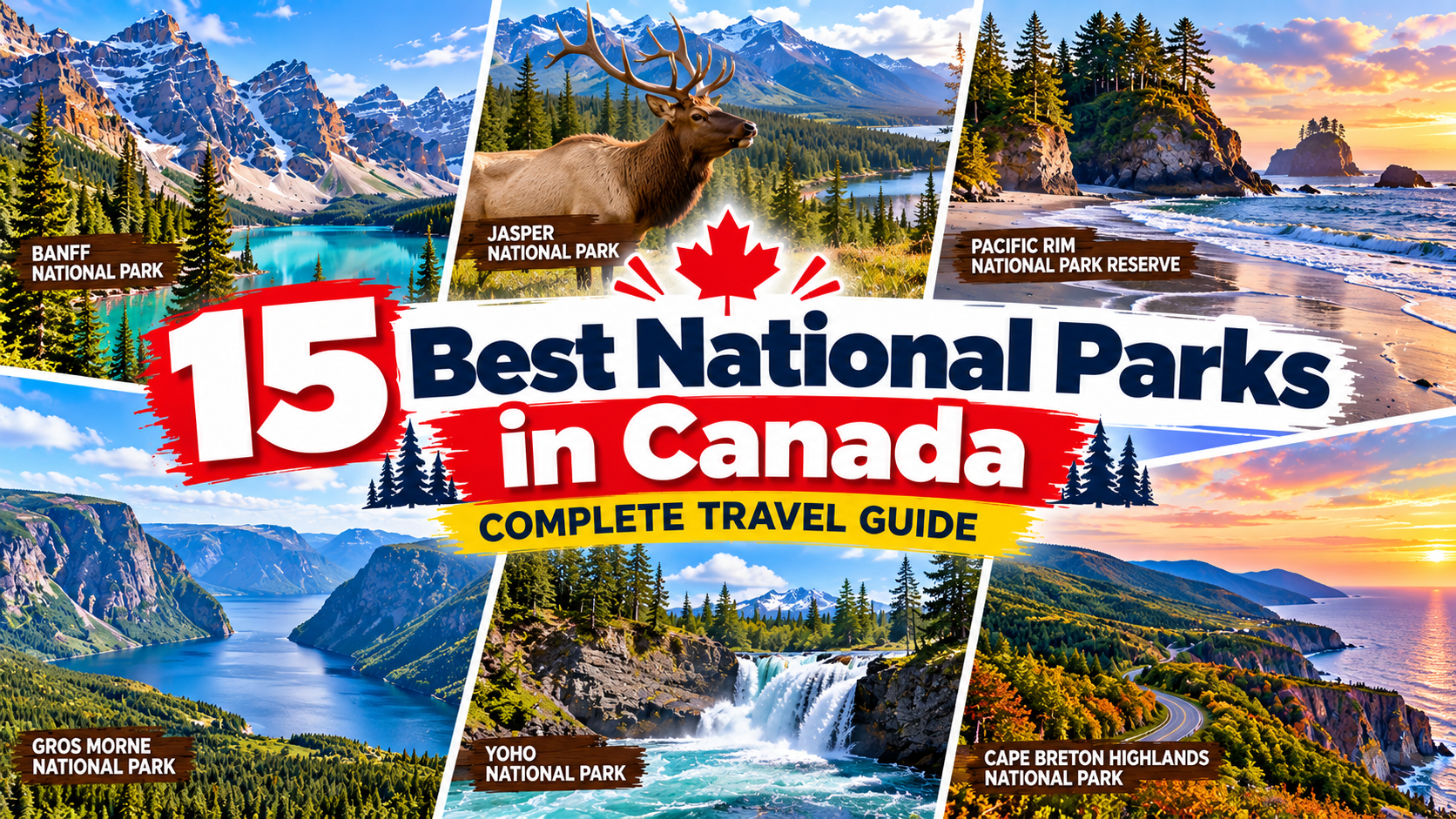
15 Best National Parks in Canada: The Ultimate Travel Guide
Canada is home to some of the world’s most extraordinary natural landscapes. From the turquoise lakes of the Rocky Mountains to the rugged Atlantic coastline, ancient rainforests, vast prairie grasslands, and remote Arctic wilderness, the country’s national parks protect an incredible variety of ecosystems.
Whether you enjoy scenic road trips, hiking, camping, wildlife photography, or peaceful nature experiences, Canada’s national parks offer unforgettable adventures.
Some of the best national parks in Canada include Banff, Jasper, Yoho, Pacific Rim, Gros Morne, Fundy, Cape Breton Highlands, and Waterton Lakes.
However, Canada’s natural beauty extends far beyond its most famous destinations. Lesser-known parks offer remarkable landscapes, wildlife habitats, and opportunities to discover different regions of the country.
In this guide, we’ll explore 15 outstanding Canadian national parks, what makes each one special, the best times to visit, and essential planning tips.
For more destination inspiration, explore our 25 Best Places to Visit in Canada.
Quick Comparison: 15 Best National Parks in Canada
| National park | Province or territory | Best known for |
|---|---|---|
| Banff | Alberta | Turquoise lakes and mountain scenery |
| Jasper | Alberta | Wilderness, glaciers and dark skies |
| Yoho | British Columbia | Waterfalls and alpine lakes |
| Kootenay | British Columbia | Mountain drives and varied landscapes |
| Waterton Lakes | Alberta | Mountains meeting prairie |
| Pacific Rim | British Columbia | Beaches and coastal rainforests |
| Glacier | British Columbia | Mountain passes and hiking |
| Mount Revelstoke | British Columbia | Subalpine meadows and forest scenery |
| Gros Morne | Newfoundland and Labrador | Fjords and dramatic geology |
| Cape Breton Highlands | Nova Scotia | Coastal cliffs and scenic drives |
| Fundy | New Brunswick | Powerful tides and coastal forests |
| Prince Edward Island | Prince Edward Island | Beaches and sand dunes |
| Forillon | Quebec | Coastal cliffs and marine scenery |
| La Mauricie | Quebec | Forests and freshwater lakes |
| Auyuittuq | Nunavut | Arctic mountains and remote wilderness |
These parks offer different experiences, so the best choice depends on your interests, travel season, budget, and comfort with outdoor activities.
1. Banff National Park, Alberta
Banff National Park is one of Canada’s most famous natural destinations.
Located in the Canadian Rockies, the park is known for turquoise lakes, towering mountains, glaciers, scenic valleys, and beautiful mountain towns.
Banff is an excellent destination for first-time visitors because many major attractions are accessible by road or public transportation.
Top attractions in Banff National Park
- Lake Louise.
- Moraine Lake.
- Johnston Canyon.
- Lake Minnewanka.
- Peyto Lake.
- Bow Lake.
- Sulphur Mountain.
- Icefields Parkway viewpoints.
Best things to do
Visitors can enjoy scenic sightseeing, hiking, mountain photography, wildlife viewing from safe distances, and seasonal outdoor activities.
Best time to visit
June through September is popular for turquoise lakes and summer hiking.
Winter offers snowy scenery and skiing opportunities.
Travel tip: Personal vehicles cannot access Moraine Lake Road. Reserve eligible shuttle transportation or use an authorized service during the operating season.
For a detailed itinerary, read our Best Places to Visit in Banff National Park.
2. Jasper National Park, Alberta
Jasper National Park is one of the largest national parks in the Canadian Rockies.
It offers dramatic mountain landscapes, glaciers, lakes, waterfalls, and extensive wilderness.
Jasper is also known for its dark-sky experiences and opportunities to observe the night sky away from major urban light pollution.
Top attractions in Jasper
- Athabasca Falls.
- Pyramid Lake.
- Patricia Lake.
- Maligne Lake.
- Columbia Icefield area.
- Icefields Parkway viewpoints.
Best things to do
- Scenic road trips.
- Mountain hiking.
- Wildlife photography.
- Stargazing.
- Waterfall sightseeing.
- Seasonal outdoor recreation.
Best time to visit
June through September is popular for general sightseeing.
Autumn and winter can offer beautiful scenery, but road and trail conditions require additional planning.
Important: The 2024 Jasper wildfire affected infrastructure, forests, and visitor areas. Some locations may remain closed or have modified access. Check current Parks Canada updates before planning.
Official information: Jasper National Park.
3. Yoho National Park, British Columbia
Yoho National Park is located west of Lake Louise in British Columbia.
Its name is associated with awe and wonder, reflecting the park’s spectacular natural landscapes.
Yoho features turquoise lakes, towering waterfalls, rugged mountains, and fascinating geological formations.
Top attractions
- Emerald Lake.
- Takakkaw Falls.
- Natural Bridge.
- Spiral Tunnels viewpoints.
- Burgess Shale fossil sites, accessible through authorized guided experiences.
Best things to do
- Walk around Emerald Lake.
- Photograph Takakkaw Falls.
- Explore scenic viewpoints.
- Enjoy suitable hiking trails.
- Learn about the park’s geology.
Best time to visit
June through September is generally the most convenient period for summer sightseeing.
Travel tip: Takakkaw Falls Road operates seasonally and has vehicle restrictions. Check access before visiting.
Official information: Yoho National Park.
4. Kootenay National Park, British Columbia
Kootenay National Park offers beautiful mountain scenery, dramatic canyons, forest landscapes, and a scenic highway connecting parts of the Canadian Rockies.
It is an excellent destination for travelers exploring Banff and nearby British Columbia.
Top attractions
- Marble Canyon.
- Paint Pots.
- Sinclair Canyon.
- Kootenay Valley viewpoints.
- Radium Hot Springs area.
Best things to do
- Scenic driving.
- Canyon walks.
- Hiking.
- Landscape photography.
- Exploring geological features.
Best time to visit
Late spring through early autumn is popular for general sightseeing.
Travel tip: Some trails and areas may be affected by wildfire damage, snow, or seasonal closures.
Official information: Kootenay National Park.
5. Waterton Lakes National Park, Alberta
Waterton Lakes National Park is located in southwestern Alberta near the United States border.
The park is famous for its remarkable landscape, where prairie grasslands meet the Rocky Mountains.
Waterton offers a different atmosphere from the busier Banff and Lake Louise areas.
Top attractions
- Upper Waterton Lake.
- Cameron Falls.
- Red Rock Canyon.
- Waterton townsite.
- Scenic mountain viewpoints.
Best things to do
- Lakeside walking.
- Scenic photography.
- Wildlife watching.
- Hiking.
- Seasonal boat experiences.
Best time to visit
June through September is popular for outdoor sightseeing.
Travel tip: Waterton is known for strong winds, and weather can change rapidly.
Official information: Waterton Lakes National Park.
6. Pacific Rim National Park Reserve, British Columbia
Pacific Rim National Park Reserve is one of Canada’s most beautiful coastal protected areas.
Located on Vancouver Island, it features rugged beaches, temperate rainforests, coastal scenery, and important Indigenous cultural landscapes.
The reserve includes distinct areas such as Long Beach, the Broken Group Islands, and the West Coast Trail.
Top attractions
- Long Beach.
- Coastal rainforest trails.
- Rugged ocean viewpoints.
- Beaches near Tofino and Ucluelet.
- West Coast Trail for properly prepared hikers.
Best things to do
- Beach walking.
- Coastal photography.
- Rainforest exploration.
- Wildlife observation.
- Advanced multi-day hiking where permitted.
Best time to visit
May through September is popular for outdoor travel, although the coast receives rain throughout the year.
Important: Ocean conditions can be dangerous. Watch for large waves, tides, and beach hazards.
Cultural travel tip: Respect Indigenous communities, cultural sites, and any access restrictions.
Official information: Pacific Rim National Park Reserve.
7. Glacier National Park, British Columbia
Glacier National Park is located in the Columbia Mountains of British Columbia.
It should not be confused with Glacier National Park in Montana, United States.
The Canadian park is known for rugged mountain peaks, glaciers, steep valleys, and challenging hiking opportunities.
Top attractions
- Rogers Pass.
- Mountain viewpoints.
- Forest trails.
- Alpine landscapes.
- Historic railway-related sites.
Best things to do
- Mountain hiking.
- Scenic driving.
- Landscape photography.
- Learning about Rogers Pass history.
- Exploring designated trails.
Best time to visit
Summer is generally the most suitable season for hiking.
Travel tip: Avalanche terrain, snow, and steep mountain conditions can create serious hazards. Follow Parks Canada access rules and avalanche restrictions.
Official information: Glacier National Park.
8. Mount Revelstoke National Park, British Columbia
Mount Revelstoke National Park is known for its lush forests, mountain scenery, and beautiful subalpine landscapes.
It is particularly popular during the summer wildflower season.
Top attractions
- Meadows in the Sky Parkway.
- Subalpine wildflower meadows.
- Forest walking trails.
- Mountain viewpoints.
- Interpretive areas.
Best things to do
- Scenic driving.
- Wildflower photography.
- Hiking.
- Forest walks.
- Mountain sightseeing.
Best time to visit
July through September is often attractive for high-elevation sightseeing, depending on snow conditions.
Travel tip: The Meadows in the Sky Parkway is seasonal, and access to upper areas depends on snow, weather, and operating conditions.
Official information: Mount Revelstoke National Park.
9. Gros Morne National Park, Newfoundland and Labrador
Gros Morne National Park is one of Atlantic Canada’s most extraordinary natural destinations.
Located on Newfoundland’s west coast, it is recognized as a UNESCO World Heritage Site for its remarkable geology and landscapes.
The park features fjords, mountains, coastal villages, and unusual rock formations.
Top attractions
- Western Brook Pond.
- The Tablelands.
- Gros Morne Mountain.
- Coastal viewpoints.
- Scenic walking trails.
Best things to do
- Explore the Tablelands.
- Enjoy coastal photography.
- Take suitable hiking trails.
- Discover the park’s geology.
- Book a seasonal boat tour where available.
Best time to visit
June through September is popular for outdoor exploration.
Travel tip: Some boat experiences require advance reservations and a walk to the departure point.
Official information: Gros Morne National Park.
10. Cape Breton Highlands National Park, Nova Scotia
Cape Breton Highlands National Park is one of the most scenic destinations in Atlantic Canada.
Located on Cape Breton Island, the park is famous for its coastal cliffs, forested mountains, and spectacular ocean views.
A portion of the famous Cabot Trail passes through the park.
Top attractions
- Skyline Trail.
- Cabot Trail viewpoints.
- Coastal lookouts.
- Forest trails.
- Scenic beaches.
Best things to do
- Drive the Cabot Trail.
- Enjoy coastal hiking.
- Photograph ocean viewpoints.
- Explore scenic picnic areas.
- Enjoy autumn foliage.
Best time to visit
June through October is popular.
Autumn is especially attractive for colourful foliage.
Travel tip: Skyline Trail access and operating rules may change. Check current Parks Canada guidance before visiting.
Official information: Cape Breton Highlands National Park.
11. Fundy National Park, New Brunswick
Fundy National Park is famous for its location along the Bay of Fundy, known for some of the world’s highest tidal ranges.
The park protects coastal forests, waterfalls, beaches, and scenic landscapes.
Top attractions
- Coastal viewpoints.
- Waterfall trails.
- Forest hiking routes.
- Bay of Fundy shoreline.
- Scenic picnic areas.
Best things to do
- Hiking.
- Waterfall photography.
- Coastal sightseeing.
- Camping.
- Observing tidal changes from safe areas.
Best time to visit
June through September is popular for hiking and camping.
Travel tip: Tides change quickly. Always check official tide information and avoid becoming trapped along the shoreline.
Official information: Fundy National Park.
12. Prince Edward Island National Park, Prince Edward Island
Prince Edward Island National Park protects beautiful coastal landscapes along the island’s northern shore.
The park is known for sandy beaches, dunes, coastal scenery, and picturesque landscapes.
Top attractions
- Cavendish Beach.
- Brackley Beach.
- Greenwich.
- Coastal viewpoints.
- Sand dune landscapes.
Best things to do
- Beach walking.
- Swimming when conditions permit.
- Coastal photography.
- Cycling on designated routes.
- Exploring boardwalks and trails.
Best time to visit
June through September is popular for beach activities.
Travel tip: Sand dunes are fragile ecosystems. Stay on designated trails and boardwalks.
Official information: Prince Edward Island National Park.
13. Forillon National Park, Quebec
Forillon National Park is located at the eastern end of the Gaspé Peninsula in Quebec.
The park offers dramatic coastal cliffs, forests, beaches, and beautiful views of the Gulf of St. Lawrence.
Top attractions
- Cap-Bon-Ami.
- Coastal hiking trails.
- Scenic cliffs.
- Marine viewpoints.
- Historic heritage sites.
Best things to do
- Coastal hiking.
- Birdwatching.
- Marine wildlife observation.
- Photography.
- Exploring historic sites.
Best time to visit
June through September is popular for coastal sightseeing.
Travel tip: Marine wildlife viewing depends on seasonal conditions, weather, and responsible observation practices.
Official information: Forillon National Park.
14. La Mauricie National Park, Quebec
La Mauricie National Park is located between Montreal and Quebec City, near Trois-Rivières.
The park is known for its forests, lakes, rolling hills, and peaceful natural scenery.
It is an excellent destination for travelers who enjoy canoeing, hiking, and quiet outdoor experiences.
Top attractions
- Scenic lakes.
- Forest trails.
- Waterfall areas.
- Lookout points.
- Canoeing routes.
Best things to do
- Hiking.
- Canoeing.
- Nature photography.
- Camping.
- Autumn foliage viewing.
Best time to visit
June through October is popular for outdoor recreation.
Autumn is particularly beautiful for forest colours.
Travel tip: Some activities require reservations, rentals, or additional fees.
Official information: La Mauricie National Park.
15. Auyuittuq National Park, Nunavut
Auyuittuq National Park is one of Canada’s most dramatic Arctic wilderness destinations.
Located on Baffin Island in Nunavut, the park features rugged mountains, glaciers, fjords, and vast remote landscapes.
It is very different from Canada’s more accessible southern national parks.
Top attractions
- Arctic mountain scenery.
- Glaciers.
- Fjord landscapes.
- Remote wilderness routes.
- Auyuittuq’s distinctive geological formations.
Best things to do
- Wilderness photography.
- Guided Arctic exploration.
- Advanced backcountry travel.
- Learning about Inuit culture and the Arctic environment.
Best time to visit
The appropriate season depends heavily on the specific activity, access route, and local conditions.
Important: Auyuittuq is not a casual road-trip destination. Access requires specialized logistics, advance planning, mandatory registration and orientation requirements, and appropriate wilderness skills.
Visitors should coordinate with Parks Canada and qualified local operators.
Official information: Auyuittuq National Park.
Best National Parks in Canada for First-Time Visitors
If you’re visiting Canada for the first time, consider national parks with established roads, visitor services, and a range of accessible sightseeing options.
Best for mountain scenery
Banff National Park
Ideal for turquoise lakes, mountain photography, scenic drives, and famous Canadian Rockies attractions.
Best for wilderness and dark skies
Jasper National Park
A strong choice for mountain scenery, waterfalls, stargazing, and a more expansive wilderness experience.
Best for coastal scenery
Pacific Rim National Park Reserve
Excellent for beaches, rainforests, and Pacific Ocean landscapes.
Best for dramatic geology
Gros Morne National Park
Ideal for unusual rock formations, fjord scenery, and geological history.
Best for a scenic road trip
Cape Breton Highlands National Park
A memorable destination for coastal drives, hiking, and ocean viewpoints.
Best National Parks in Canada by Season
Spring: March to May
Spring can be a quieter time to explore some national parks.
However, high-elevation trails may remain snowy, and certain seasonal roads and services may be closed.
Summer: June to August
Summer is the most popular season for visiting many Canadian national parks.
Popular activities include hiking, camping, canoeing, scenic driving, and photography.
Autumn: September to November
Autumn offers beautiful foliage in many forested regions.
Cape Breton Highlands and La Mauricie are particularly attractive for fall colours.
Snow may arrive early in mountain parks.
Winter: December to February
Winter offers skiing, snowshoeing, snowy scenery, and other seasonal activities.
However, some roads and visitor services may be unavailable.
For detailed seasonal advice, read our Best Time to Visit Canada: Month-by-Month Guide.
How Much Does It Cost to Visit Canada’s National Parks?
Many Canadian national parks charge admission fees, although special programs and exemptions may apply.
The total cost of visiting a national park can include:
- Park admission.
- Camping fees.
- Accommodation.
- Transportation.
- Parking.
- Shuttle services.
- Guided activities.
- Equipment rentals.
- Food and supplies.
Parks Canada Discovery Pass
The Parks Canada Discovery Pass provides admission to participating national parks and other eligible Parks Canada places for its period of validity.
It does not include every service or activity.
Camping, reservations, guided experiences, and other services may have separate charges.
Check current admission rules and pass prices before purchasing.
Official information: Parks Canada – Fees and Passes.
How to Plan a Canadian National Parks Road Trip
Canada is too large to visit all its national parks in a single short road trip.
Instead, choose one region and explore several nearby parks.
Canadian Rockies Road Trip
A popular route includes:
Calgary → Banff → Lake Louise → Yoho → Icefields Parkway → Jasper
Allow approximately seven to ten days for a comfortable trip.
Read our Canadian Rockies Road Trip Planning Guide.
British Columbia Mountain Parks Road Trip
Consider exploring:
Revelstoke → Mount Revelstoke National Park → Glacier National Park → Golden → Yoho National Park
This route combines mountain scenery, hiking, and scenic driving.
Atlantic Canada National Parks Road Trip
Consider visiting:
Fundy National Park → Prince Edward Island National Park → Cape Breton Highlands National Park
Allow sufficient time for driving and exploring each destination.
Newfoundland National Parks Adventure
Combine Gros Morne National Park with additional Newfoundland destinations.
Long driving distances and limited services in some areas make advance planning important.
Essential Tips for Visiting National Parks in Canada
1. Check park conditions
Weather, wildfire impacts, trail maintenance, and wildlife activity can affect access.
2. Reserve accommodation early
Popular campgrounds and hotels may fill during peak travel periods.
3. Carry appropriate clothing
Mountain and coastal weather can change rapidly.
4. Respect wildlife
Never feed animals or approach them for photographs.
5. Stay on designated trails
This protects fragile ecosystems and reduces safety risks.
6. Follow fire restrictions
Campfire bans and other wildfire-related restrictions may be introduced during dry conditions.
7. Download offline maps
Mobile coverage may be limited in remote parks.
8. Plan transportation carefully
Some parks require shuttles, ferries, flights, or specialized transportation.
9. Prepare for emergencies
Carry suitable supplies and understand the risks associated with your activities.
10. Respect Indigenous cultures and protected landscapes
Many national parks are located within the traditional territories of Indigenous peoples.
Follow local guidance, respect cultural sites, and learn about the communities connected to these landscapes.
Frequently Asked Questions About Canada’s National Parks
What is the most famous national park in Canada?
Banff National Park is among Canada’s most internationally recognized national parks, famous for Lake Louise, Moraine Lake, and Rocky Mountain scenery.
Which national park in Canada is the most beautiful?
Beauty is subjective. Banff, Jasper, Pacific Rim, Gros Morne, and Cape Breton Highlands are especially popular for their landscapes.
What is the best national park in Canada for first-time visitors?
Banff National Park is a strong choice because it offers famous attractions, established visitor services, and a wide range of sightseeing experiences.
Which national parks are best for hiking?
Banff, Jasper, Yoho, Glacier, Gros Morne, and Cape Breton Highlands offer excellent hiking opportunities, depending on trail conditions and ability.
Which national parks are best for families?
Banff, Prince Edward Island, Fundy, and La Mauricie offer a range of activities that can suit families.
Are Canada’s national parks free?
Not always. Many national parks charge admission, although special programs and exemptions may apply.
When is the best time to visit Canada’s national parks?
June through September is popular for many parks, but the ideal season depends on the region and activities.
Can you visit Canadian national parks without a car?
Some parks, including Banff, offer public transportation and shuttle services to selected attractions. Others require a vehicle or specialized transportation.
Do you need reservations for Canadian national parks?
Some campgrounds, shuttles, guided experiences, and backcountry activities require reservations. Entry requirements vary by park and season.
Are Canada’s national parks safe to visit?
National parks offer rewarding experiences, but visitors must prepare for weather, wildlife, terrain, and remote conditions. Follow official safety guidance.
Final Thoughts: Discover the Best National Parks in Canada
Canada’s national parks protect some of the most beautiful landscapes on Earth.
From the turquoise lakes of Banff and Jasper to the coastal rainforests of Pacific Rim, the geological wonders of Gros Morne, and the dramatic Arctic mountains of Auyuittuq, each park offers a unique perspective on Canada’s natural heritage.
For first-time visitors, Banff, Jasper, and Yoho provide an excellent introduction to the Canadian Rockies.
Travelers interested in coastal scenery should consider Pacific Rim, Cape Breton Highlands, or Gros Morne.
If you enjoy quiet forests and freshwater lakes, La Mauricie and Fundy are also rewarding destinations.
Choose parks that match your interests, travel season, and experience level. Plan transportation and accommodation early, follow park regulations, and allow time to appreciate the natural landscapes.
Continue exploring Canada:
- 25 Best Places to Visit in Canada
- Best Places to Visit in Banff National Park
- Canadian Rockies Road Trip Planning Guide
- 20 Free Things to Do in Canada
- Best Time to Visit Canada
- Canada Travel Budget Guide
Official travel resources:
Disclaimer: This article provides general travel information. National park access, admission fees, transportation, trails, accommodation, and seasonal services may change. Always verify current details with Parks Canada before visiting.