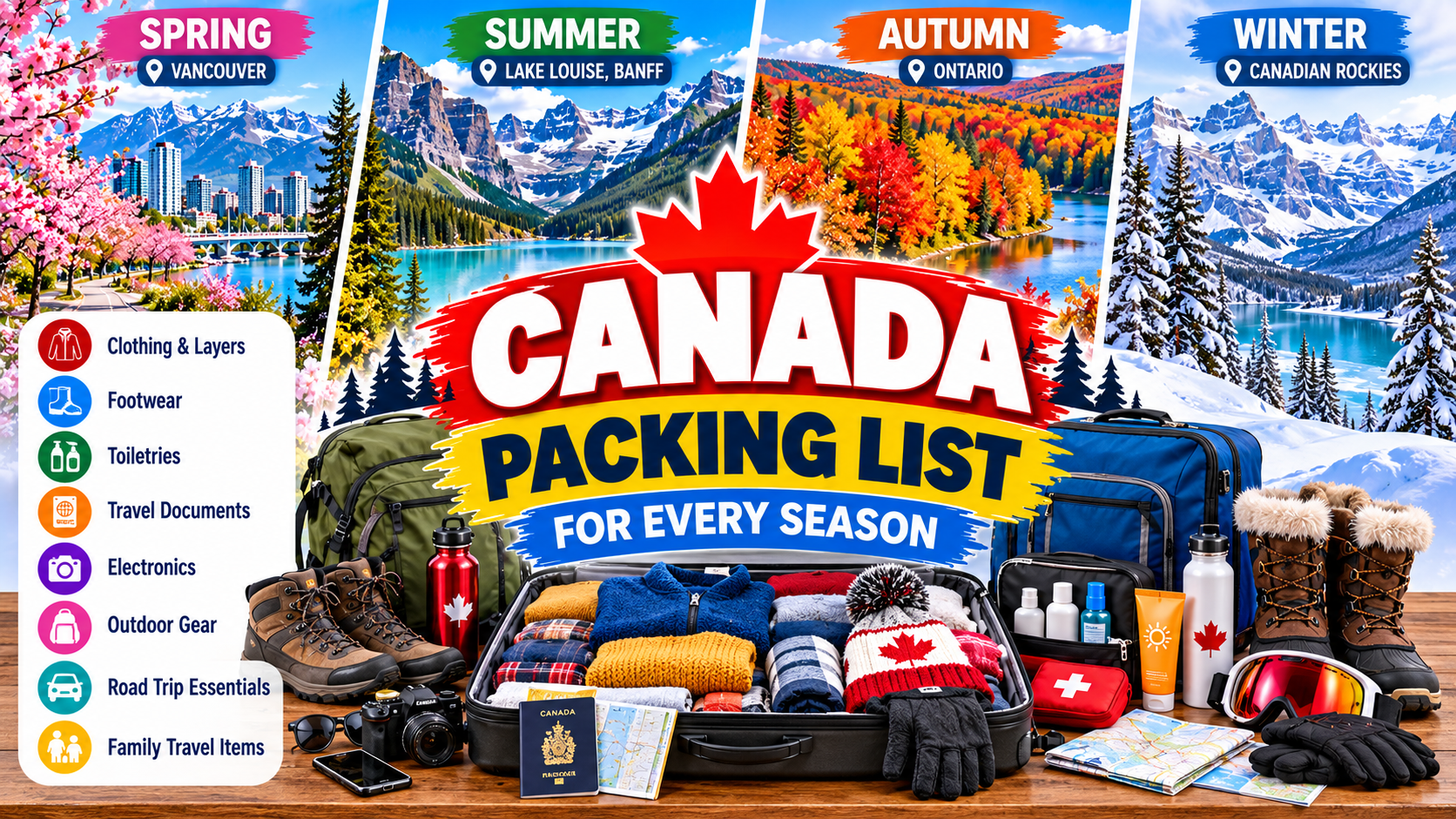
Canada Packing List for Every Season: Complete Travel Checklist
Planning a trip to Canada? Whether you’re visiting the Rocky Mountains, exploring Toronto, discovering Vancouver, or experiencing a snowy winter in Alberta, packing the right items can make your trip much more comfortable.
Canada is a large country with different climates, landscapes, and weather conditions. A summer vacation in Vancouver can require completely different clothing from a winter trip to Edmonton or a fall road trip through Ontario.
That’s why having a reliable Canada packing list is essential.
From lightweight summer clothing and waterproof jackets to thermal layers, winter boots, travel documents, and road trip supplies, this guide covers everything you need for a Canadian vacation.
In this complete Canada packing guide, you’ll discover:
- What to pack for Canada in spring, summer, fall, and winter.
- Essential clothing and footwear.
- Important travel documents.
- Toiletries, medications, and electronics.
- Packing lists for Banff, Vancouver, Toronto, and other destinations.
- Road trip and outdoor adventure essentials.
- Family and children’s packing tips.
- Practical packing checklists for different trip lengths.
Whether you’re visiting Canada for three days or three weeks, this guide will help you prepare.
1. Understanding Canada’s Weather Before Packing
Before deciding what to pack for Canada, it’s important to understand the country’s seasonal weather.
Canada experiences four distinct seasons in many regions, but conditions vary significantly depending on location.
For example, Vancouver generally has milder winters than Edmonton or Winnipeg. Mountain destinations such as Banff and Jasper can experience snow even when nearby cities are relatively warm.
Canada weather by season
| Season | Typical months | What to expect |
|---|---|---|
| Spring | March–May | Cool mornings, rain, changing temperatures, lingering snow in some regions |
| Summer | June–August | Warm days, occasional heat, thunderstorms, cooler mountain evenings |
| Fall | September–November | Cool mornings, changing leaves, rain, frost, early snow in some areas |
| Winter | December–February | Freezing temperatures in many regions, snow, ice, and wind |
These months are general seasonal guides. Weather does not change at the same time across Canada.
Important packing advice
Always check the forecast for your specific destination shortly before departure.
A packing list for coastal British Columbia may be very different from one for northern Alberta or the Canadian Rockies.
For help choosing your travel dates, read our Best Time to Visit Canada guide.
2. Essential Canada Packing List for Every Traveler
Regardless of the season, some travel essentials belong in almost every suitcase.
Basic clothing checklist
-
Comfortable T-shirts or tops
-
Long-sleeve shirts
-
Comfortable pants or jeans
-
Sleepwear
-
Underwear
-
Socks
-
Comfortable walking shoes
-
Lightweight sweater or fleece
-
Weather-appropriate outerwear
-
One outfit suitable for restaurants or special occasions
Travel accessories
-
Sunglasses
-
Reusable water bottle
-
Small daypack
-
Phone charger
-
Portable power bank
-
Travel-size toiletries
-
Personal medications
-
Travel documents
-
Credit or debit cards
-
Some Canadian currency if needed
Optional items
-
Camera
-
Travel pillow
-
Packing cubes
-
Laundry bag
-
Small umbrella
-
Travel journal
-
Binoculars for wildlife viewing
Packing tip: Choose clothing that can be combined into multiple outfits. This reduces luggage weight and makes packing easier.
3. What to Pack for Canada in Spring
Season: March to May
Spring in Canada can be unpredictable.
Some destinations begin experiencing mild temperatures, while others may still have snow, freezing mornings, or icy sidewalks.
Rain is common in several regions, particularly coastal British Columbia.
Spring clothing essentials
-
Waterproof or water-resistant jacket
-
Warm sweater or fleece
-
Long-sleeve shirts
-
Comfortable pants
-
Lightweight thermal layer if visiting colder regions
-
Waterproof walking shoes
-
Warm socks
-
Light gloves
-
Hat or beanie
-
Sunglasses
Spring accessories
-
Compact umbrella
-
Small backpack
-
Reusable water bottle
-
Moisturizer
-
Lip balm
-
Sunscreen
What to wear in Vancouver during spring
Vancouver often experiences rainy conditions during spring.
A waterproof jacket, comfortable walking shoes, and layered clothing are useful.
What to wear in Banff during spring
Banff can remain cold and snowy well into spring.
Bring warm layers, a weather-resistant jacket, and footwear suitable for changing trail conditions.
Spring packing tip
Avoid packing only summer clothing, even if the forecast predicts a few warm days.
Temperatures can change quickly, particularly in mountain destinations.
4. What to Pack for Canada in Summer
Season: June to August
Summer is one of Canada’s busiest travel seasons.
Popular destinations include Banff, Jasper, Vancouver, Toronto, Niagara Falls, Montreal, and the Atlantic provinces.
Summer weather can be warm or hot, but evenings may be cool in mountain and northern regions.
Summer clothing checklist
-
Lightweight T-shirts
-
Shorts
-
Comfortable pants
-
Breathable shirts
-
Summer dresses or casual outfits
-
Lightweight sweater
-
Thin rain jacket
-
Comfortable walking shoes
-
Sandals
-
Swimwear
-
Sun hat
Summer travel accessories
-
Sunglasses
-
Broad-spectrum sunscreen
-
Insect repellent
-
Reusable water bottle
-
Daypack
-
Portable charger
-
Lightweight rain protection
What to pack for Banff in summer
Even during July and August, Banff can experience cool mornings, chilly evenings, and sudden weather changes.
Bring a fleece, rain jacket, and sturdy walking shoes.
If you’re planning mountain hikes, pack additional safety equipment suited to your route.
What to pack for Toronto in summer
Toronto can experience hot and humid weather.
Lightweight clothing, breathable footwear, sunscreen, and a reusable water bottle are helpful.
What to pack for Vancouver in summer
Vancouver often has pleasant summer weather, but a light jacket is useful for cooler evenings and coastal outings.
Summer packing tip
Don’t forget sun protection. UV exposure can be significant at higher elevations and around reflective surfaces such as water and snow.
5. What to Pack for Canada in Fall
Season: September to November
Fall is a beautiful time to visit Canada.
Forests turn red, orange, and yellow, creating spectacular scenery across Ontario, Quebec, Alberta, and Atlantic Canada.
However, autumn temperatures can vary significantly.
September may feel warm in some cities, while November can bring winter-like conditions.
Fall clothing checklist
-
Warm sweater
-
Fleece jacket
-
Waterproof outer layer
-
Long-sleeve shirts
-
Comfortable pants
-
Warm socks
-
Closed-toe walking shoes
-
Light gloves
-
Scarf
-
Warm hat
-
Thermal layers for colder regions
Fall photography essentials
-
Camera or smartphone
-
Portable charger
-
Extra memory card if needed
-
Lens-cleaning cloth
-
Small backpack
-
Weather protection for electronics
What to pack for Ontario in October
Bring layers, a jacket, comfortable walking shoes, and rain protection.
Weather can be mild one day and cold the next.
What to pack for Banff in September
Golden larch season is popular in the Canadian Rockies.
Mountain temperatures can drop below freezing, and snow is possible.
Pack warm layers, weather-resistant outerwear, and appropriate hiking footwear.
Fall packing tip
Check the weather forecast daily if you’re planning a road trip through multiple regions.
Read our 20 Best Places to See Fall Colours in Canada guide for autumn destination ideas.
6. What to Pack for Canada in Winter
Season: December to February
Winter packing requires extra preparation.
Many Canadian destinations experience freezing temperatures, snow, icy sidewalks, and strong winds.
However, winter conditions vary significantly by region.
Vancouver’s coastal winter is usually milder than the winters of Edmonton, Winnipeg, or Quebec City.
Essential winter clothing checklist
-
Insulated winter jacket
-
Thermal base-layer tops
-
Thermal leggings or long underwear
-
Warm fleece or wool sweaters
-
Insulated winter boots
-
Warm wool or synthetic socks
-
Insulated gloves or mittens
-
Warm winter hat
-
Scarf or neck warmer
-
Wind-resistant outer layer
-
Warm pants
-
Sunglasses
Additional winter essentials
-
Lip balm
-
Moisturizer
-
Sunscreen
-
Hand warmers
-
Portable charger
-
Weather-resistant backpack
-
Traction aids when appropriate for conditions
-
Spare gloves and socks
What to pack for Edmonton in winter
Edmonton can experience very cold winter weather.
An insulated jacket, warm boots, thermal layers, gloves, and a winter hat are important.
For extended outdoor activities, additional insulation and wind protection may be necessary.
What to pack for Quebec City in winter
Quebec City is famous for its beautiful winter scenery.
Bring warm layers, insulated boots, gloves, and clothing suitable for walking on snowy or icy streets.
What to pack for Banff in winter
Banff offers skiing, snowshoeing, skating, and beautiful mountain scenery.
Pack insulated clothing and appropriate winter footwear.
If you’re skiing or snowboarding, use equipment designed for those activities.
Winter packing tip
Choose clothing based on the forecast, wind chill, activity level, and time spent outdoors rather than relying only on average seasonal temperatures.
For more information, read our Canadian Winter Survival Tips for Newcomers.
7. How to Dress in Layers for Canadian Weather
Layering is one of the most useful clothing strategies for traveling in Canada.
Instead of wearing one extremely thick garment, combine multiple layers that can be adjusted throughout the day.
Layer 1: Base layer
The base layer sits closest to your skin.
Its purpose is to help manage moisture and keep you comfortable.
Suitable materials include merino wool and moisture-wicking synthetic fabrics.
Cotton is generally less suitable for strenuous cold-weather activities because it retains moisture.
Layer 2: Insulating layer
The middle layer helps retain body heat.
Examples include:
- Fleece jackets
- Wool sweaters
- Insulated jackets
- Lightweight down or synthetic insulation
Layer 3: Outer layer
The outer layer protects against wind, rain, and snow.
Examples include:
- Waterproof jackets
- Wind-resistant shells
- Insulated winter coats
- Weatherproof ski jackets
Example winter outfit
Base layer: Thermal top and leggings.
Middle layer: Fleece or wool sweater.
Outer layer: Insulated winter jacket.
Footwear: Insulated boots with warm socks.
Accessories: Gloves, hat, and neck warmer.
Layering helps you adjust when moving between cold outdoor conditions and heated indoor spaces.
8. Best Shoes to Pack for Canada
Footwear is one of the most important parts of your Canada packing list.
The right shoes depend on your activities and the season.
| Activity | Recommended footwear |
|---|---|
| City sightseeing | Comfortable walking shoes |
| Summer hiking | Trail shoes or hiking boots |
| Rainy weather | Water-resistant or waterproof shoes |
| Winter sightseeing | Insulated boots with good traction |
| Beach visits | Sandals or water shoes where appropriate |
| Mountain hiking | Footwear suited to terrain and conditions |
| Restaurants and evening outings | Comfortable casual shoes |
Footwear tips
Break in new shoes before your trip.
Avoid relying on smooth-soled fashion shoes for icy conditions.
For mountain hikes, check whether snow, mud, or rocky terrain requires additional equipment.
9. Travel Documents to Pack for Canada
Travel documents are essential, especially for international visitors.
Important documents checklist
-
Valid passport
-
Visa or electronic travel authorization, if required
-
Flight confirmation
-
Hotel reservation details
-
Travel insurance information
-
Driver’s licence, if planning to drive
-
Rental vehicle reservation
-
Emergency contact details
-
Copies of important documents
-
Required documents for accompanying children
Important information for international travelers
Canada’s entry requirements depend on your nationality, travel document, and method of entry.
Some travelers require a visitor visa, while others may need an electronic travel authorization (eTA) when flying.
Check the official Government of Canada website before traveling.
Official information: https://www.canada.ca/en/immigration-refugees-citizenship/services/visit-canada.html
Travel document tip
Keep your passport, travel documents, essential medications, and valuables in your carry-on luggage rather than checked baggage.
10. Toiletries and Personal Care Packing List
Pack essential personal care items to stay comfortable during your trip.
Toiletries checklist
-
Toothbrush
-
Toothpaste
-
Shampoo
-
Conditioner
-
Soap or body wash
-
Deodorant
-
Hairbrush or comb
-
Moisturizer
-
Lip balm
-
Sunscreen
-
Razor
-
Personal hygiene products
-
Contact lenses and supplies, if needed
-
Prescription medications
-
Basic first-aid supplies
Winter skincare tip
Cold weather and indoor heating can make skin feel dry.
Moisturizer and lip balm are especially useful during winter travel.
Airport security reminder
Carry-on liquids, gels, and aerosols are subject to airport security restrictions.
Check the Canadian Air Transport Security Authority’s current rules.
Official website: https://www.catsa-acsta.gc.ca/
11. Electronics and Travel Gadgets
Electronics can make your Canadian vacation more convenient.
Electronics checklist
-
Smartphone
-
Phone charger
-
Portable power bank
-
Charging cables
-
Camera
-
Camera batteries
-
Memory cards
-
Headphones
-
Travel plug adapter, if needed
-
Laptop or tablet, if needed
-
Car charging adapter for road trips
Electrical outlets in Canada
Canada generally uses Type A and Type B electrical outlets, with a nominal supply of 120 volts and 60 Hz.
Travelers from countries using different plug types may need an adapter.
Check whether your electronics support Canadian voltage before plugging them in.
Power bank tip
Spare lithium batteries and power banks generally belong in carry-on baggage rather than checked luggage. Check your airline’s battery capacity and transport rules.
12. Canada Road Trip Packing List
Road trips are one of the best ways to explore Canada.
Popular routes include the Icefields Parkway, Banff to Jasper, Vancouver Island, the Cabot Trail, and scenic drives through Ontario and Quebec.
Road trip essentials
-
Valid driver’s licence
-
Vehicle registration and insurance information, as applicable
-
Rental agreement, if applicable
-
Navigation app
-
Downloaded offline maps
-
Phone charger
-
Reusable water bottles
-
Snacks
-
Weather-appropriate clothing
-
Emergency contact information
-
First-aid kit
-
Flashlight
-
Blanket
-
Roadside emergency supplies
-
Tire repair or spare-tire equipment appropriate to the vehicle
Winter road trip additions
-
Ice scraper
-
Snow brush
-
Extra warm clothing
-
Emergency blankets
-
Extra food and water
-
Winter-rated tires appropriate to the route
-
Small shovel
-
Jumper cables or suitable jump starter
Important road trip advice
Some remote Canadian highways have limited fuel stations and unreliable mobile reception.
Download maps and check road conditions before departure.
In winter, verify tire and chain requirements for the roads you’ll be using.
Read our 15 Best Road Trips in Canada guide for scenic driving ideas.
13. What to Pack for Banff and Jasper National Parks
The Canadian Rockies require special attention when packing.
Mountain weather can change rapidly, even during summer.
Banff and Jasper essentials
-
Layered clothing
-
Waterproof jacket
-
Warm fleece
-
Comfortable hiking footwear
-
Reusable water bottle
-
Daypack
-
Sunscreen
-
Sunglasses
-
Hat
-
Offline maps
-
Snacks
-
First-aid supplies
-
Wildlife safety information
Hiking safety equipment
Depending on the trail, season, and conditions, you may also need:
- Navigation equipment
- Emergency shelter
- Headlamp
- Additional food and water
- Insulating clothing
- Traction devices
- Bear spray and knowledge of how to use it
Bear spray must be transported and handled according to applicable regulations. Do not pack bear spray in airline baggage.
Important mountain travel tip
A sunny morning does not guarantee good weather for the rest of the day.
Check trail conditions, avalanche information when relevant, and weather forecasts.
Official website: https://parks.canada.ca/
Read our Canadian Rockies Road Trip Guide for itinerary planning.
14. What to Pack for Vancouver
Vancouver’s coastal climate makes rain protection useful during much of the year.
Vancouver packing essentials
-
Waterproof jacket
-
Comfortable walking shoes
-
Lightweight sweater
-
Casual clothing
-
Umbrella
-
Sunglasses
-
Small backpack
-
Phone charger
Seasonal advice
Spring: Prepare for rain and cool mornings.
Summer: Bring lightweight clothing and a light jacket.
Fall: Pack waterproof footwear and layered clothing.
Winter: Bring warm layers and rain protection; mountain excursions may require full winter equipment.
Read our Vancouver Travel Guide.
15. What to Pack for Toronto
Toronto offers museums, shopping, restaurants, parks, and waterfront attractions.
Your packing list should reflect the season.
Toronto packing essentials
-
Comfortable walking shoes
-
Seasonal jacket
-
Casual clothing
-
Daypack
-
Sunglasses
-
Phone charger
-
Reusable water bottle
Seasonal advice
Summer: Lightweight clothing for warm and humid conditions.
Fall: Sweaters and a jacket.
Winter: Insulated clothing, gloves, and suitable boots.
Spring: Layers and rain protection.
Read our 15 Best Things to Do in Toronto guide.
16. What to Pack for Niagara Falls
Niagara Falls is a popular Canadian destination throughout the year.
Essential items
-
Comfortable walking shoes
-
Weather-appropriate jacket
-
Waterproof phone protection
-
Camera
-
Reusable water bottle
-
Sunglasses
-
Seasonal accessories
Special packing tip
Mist from the waterfalls can make nearby viewing areas wet.
A waterproof outer layer and protection for electronics are helpful.
Read our Niagara Falls Travel Guide.
17. What to Pack for Edmonton and Calgary
Edmonton and Calgary experience significant seasonal temperature changes.
Summer essentials
- Lightweight clothing
- Walking shoes
- Sunscreen
- Sunglasses
- Light jacket
- Water bottle
Fall essentials
- Sweater
- Weather-resistant jacket
- Comfortable shoes
- Warm layers
- Gloves when needed
Winter essentials
- Insulated jacket
- Thermal layers
- Winter boots
- Gloves
- Warm hat
- Neck warmer
Spring essentials
- Waterproof jacket
- Sweater
- Closed-toe shoes
- Layered clothing
For destination ideas, read our Calgary vs Edmonton Travel Comparison and Things to Do in Edmonton Throughout the Year.
18. Canada Packing List for Families with Kids
Traveling with children requires additional planning.
Family travel checklist
-
Extra clothing
-
Comfortable shoes
-
Seasonal jackets
-
Snacks
-
Reusable water bottles
-
Child-friendly toiletries
-
Medications
-
Entertainment for long journeys
-
Favourite comfort item
-
Diapers and wipes, if needed
-
Child safety equipment
-
Travel documents
Winter travel with children
Pack extra gloves, socks, and warm layers.
Children may become uncomfortable quickly when clothing gets wet.
Family packing tip
Keep essential items in a small, easily accessible bag rather than packing everything in your main suitcase.
19. What to Pack for a 3-Day Canada Trip
For a short weekend getaway, pack light.
Suggested three-day checklist
-
3 tops
-
2 pairs of pants or suitable bottoms
-
3–4 sets of underwear
-
3–4 pairs of socks
-
1 sweater or fleece
-
1 seasonal jacket
-
1 pair of comfortable walking shoes
-
Sleepwear
-
Toiletries
-
Travel documents
-
Electronics and chargers
Adjust quantities for weather, activities, and laundry access.
20. What to Pack for a 7-Day Canada Trip
For a one-week vacation, focus on versatile clothing.
Suggested seven-day checklist
-
5–7 tops
-
2–3 pairs of pants or suitable bottoms
-
7–8 sets of underwear
-
7–8 pairs of socks
-
1–2 sweaters
-
1 seasonal jacket
-
1–2 pairs of shoes
-
Sleepwear
-
Toiletries
-
Travel documents
-
Electronics
-
Daypack
-
Activity-specific equipment
Packing tip
If laundry facilities are available, you may need fewer clothes.
21. What to Pack for a 14-Day Canada Trip
For a two-week vacation, packing efficiently is more important than packing a separate outfit for every day.
Suggested checklist
-
7–9 tops
-
3–4 pairs of pants or suitable bottoms
-
8–10 sets of underwear
-
8–10 pairs of socks
-
2 sweaters or insulating layers
-
1–2 jackets suited to your destinations
-
2 pairs of shoes
-
Sleepwear
-
Toiletries
-
Laundry supplies if needed
-
Travel documents
-
Electronics
-
Daypack
Plan to do laundry during the trip rather than carrying excessive luggage.
22. What Not to Pack for Canada
Avoid unnecessary items that make luggage heavy or create problems at airports.
Items to reconsider
Too many clothes: Choose versatile outfits instead.
Multiple heavy jackets: Pack outerwear suited to the expected conditions.
Excessive toiletries: Many everyday products are available in Canada.
Unnecessary valuables: Leave expensive items at home unless required.
Prohibited items: Check Canadian customs and airline regulations before traveling.
Unapproved food or agricultural products: Food, plant, and animal products may be restricted and must be declared as required.
Important reminder
Do not assume an item permitted in your home country can automatically be brought into Canada.
Check the Canada Border Services Agency’s rules.
Official website: https://www.cbsa-asfc.gc.ca/
23. How to Pack Light for Canada
Packing light can make travel easier, especially when moving between multiple cities.
Tip 1: Use packing cubes
Packing cubes help organize clothing and accessories.
Tip 2: Choose neutral colours
Neutral clothing can be combined into different outfits.
Tip 3: Wear bulky clothing while traveling
If appropriate for the journey, wearing your heaviest jacket or shoes can save luggage space.
Tip 4: Limit footwear
Most city vacations require only a few suitable pairs of shoes.
Tip 5: Pack travel-size toiletries
Small containers save space and may help meet carry-on restrictions.
Tip 6: Check accommodation amenities
Hotels and vacation rentals may provide hair dryers, towels, and laundry facilities.
Tip 7: Leave room for souvenirs
Avoid filling your suitcase completely before departure.
24. Canada Packing Checklist by Season
Use this quick comparison when preparing your suitcase.
| Essential item | Spring | Summer | Fall | Winter |
|---|---|---|---|---|
| Comfortable walking shoes | Yes | Yes | Yes | Yes |
| Waterproof jacket | Yes | Useful | Yes | Depends on conditions |
| Lightweight clothing | Some | Yes | Some | Indoor use |
| Warm sweater | Yes | Useful | Yes | Yes |
| Thermal layers | Region-dependent | Mountain-dependent | Region-dependent | Yes |
| Winter boots | Region-dependent | No | Region-dependent | Yes in snowy areas |
| Gloves | Sometimes | Usually no | Sometimes | Yes |
| Warm hat | Sometimes | Usually no | Sometimes | Yes |
| Sunscreen | Yes | Yes | Yes | Yes |
| Sunglasses | Yes | Yes | Yes | Yes |
| Reusable water bottle | Yes | Yes | Yes | Yes |
| Portable charger | Yes | Yes | Yes | Yes |
25. Final Canada Packing Checklist Before Departure
Before leaving for Canada, review this final checklist.
Travel documents
-
Passport checked
-
Entry requirements confirmed
-
Flight details saved
-
Accommodation booked
-
Insurance documents accessible
-
Emergency contacts saved
Clothing
-
Seasonal outfits packed
-
Appropriate jacket packed
-
Comfortable footwear included
-
Warm layers included when needed
-
Socks and underwear packed
Personal essentials
-
Medications packed
-
Toiletries packed
-
Glasses or contact lenses packed
-
Sunscreen included
-
Personal care items included
Electronics
-
Phone charged
-
Chargers packed
-
Power bank packed according to airline rules
-
Travel adapter included if needed
-
Offline maps downloaded
Travel planning
-
Weather forecast checked
-
Transportation arranged
-
Attraction reservations confirmed
-
Road conditions reviewed if driving
-
Airline baggage allowances checked
Frequently Asked Questions About Packing for Canada
What should I pack for my first trip to Canada?
Pack travel documents, comfortable clothing, walking shoes, seasonal outerwear, toiletries, medications, and electronics. Adjust your packing list for the destinations and season.
Do I need a winter jacket in Canada?
It depends on when and where you’re traveling. An insulated winter jacket is important for many Canadian destinations in winter but may not be necessary for a summer city vacation.
What should I wear in Canada in September?
Bring layered clothing, a sweater, comfortable shoes, and a weather-resistant jacket. Mountain and northern destinations may require warmer equipment.
What should I pack for Canada in October?
Pack sweaters, long pants, warm socks, a jacket, and rain protection. In colder regions, gloves and thermal layers may be necessary.
What should I pack for Canada in December?
For cold-weather destinations, bring an insulated jacket, thermal layers, winter boots, gloves, a warm hat, and a neck warmer.
Do I need waterproof shoes in Canada?
Waterproof footwear is useful for rainy weather, wet trails, snow, and slushy conditions. The type depends on your destination and activities.
What should I pack for Banff in July?
Bring lightweight clothing, a fleece, waterproof jacket, comfortable hiking footwear, sunscreen, sunglasses, and a daypack. Prepare for cooler mountain weather.
What should I pack for Vancouver in November?
Bring waterproof outerwear, comfortable water-resistant shoes, warm layers, and an umbrella.
Can I bring food into Canada?
Some foods may be allowed, but restrictions and declaration requirements apply. Check the Canada Border Services Agency’s current rules.
Can I bring prescription medication to Canada?
Travelers can generally bring certain medications for personal use, subject to Canadian rules. Keep medication in properly labelled packaging and carry supporting documentation when appropriate. Check Health Canada and border requirements, especially for controlled substances.
Do I need a travel adapter in Canada?
You may need a plug adapter if your devices use different plug types. Also verify that your devices support Canada’s electrical voltage.
How much luggage should I bring for a week in Canada?
For many trips, a medium suitcase or carry-on may be sufficient, depending on the season, baggage rules, and planned activities. Winter clothing generally requires more space.
Final Thoughts: Pack Smart for Every Season in Canada
Canada is a beautiful country to explore throughout the year, but preparing for the weather is essential.
A well-planned Canada packing list can help you stay comfortable while visiting cities, national parks, mountain destinations, coastal regions, and winter attractions.
For spring, focus on layers and rain protection.
For summer, pack breathable clothing, sunscreen, and a light jacket.
For fall, prepare for changing temperatures with sweaters, comfortable footwear, and weather-resistant outerwear.
For winter, prioritize insulated clothing, thermal layers, warm boots, gloves, and appropriate safety equipment.
Most importantly, check the weather forecast for your specific destinations before traveling.
With the right clothing, travel documents, and essential supplies, you’ll be ready to enjoy Canada’s incredible landscapes and attractions in every season.
Continue exploring with Explore Canada Daily:
- Best Time to Visit Canada
- First-Time Visitor’s Guide to Canada
- Canadian Winter Survival Tips for Newcomers
- Canadian Rockies Road Trip Guide
- 20 Best Places to See Fall Colours in Canada
- 15 Best Road Trips in Canada
- Canada Travel Budget Guide
- Vancouver Travel Guide
Official resources:
- Environment and Climate Change Canada — Weather
- Government of Canada — Visit Canada
- Canadian Air Transport Security Authority
- Canada Border Services Agency
- Parks Canada
- Travel Alberta
- Destination BC
Disclaimer: Weather conditions, airline baggage policies, customs regulations, park requirements, and travel entry rules may change. Always confirm current information with official authorities before departure.